Ajoxi
  • Pillar
    CLOUD PHONE

    Cloud phone, messaging, video, fax, chat — the full UCaaS stack.

    • Virtual Phone NumberLocal & toll-free numbers, anywhere
    • Business PhoneCalling, SMS, video, one login
    • Customer EngagementEvery channel, one thread
    • Personal AIAI sidekick for every rep
    • SMS & MMSText from the main business line
    • Team ChatInternal chat, tied to customers
    • Video MeetingsRooms with AI notes + recap
    • Online FaxFax without the fax machine
    • Website ChatbotAuto-resolves order status & returns
    • Phone SystemModern PBX with AI built in
    Featured
    Everything included.
    Cloud phone, AI contact center, AI Receptionist, SMS, video, 300+ integrations.
    See plans & pricing
  • Core Capabilities
    • AI Receptionist24/7 first answer · 32 languages
    • AI SentimentRoutes upset callers automatically
    • AI Agent AssistWhisper scripts + next-best-action
    • Conversation IntelligenceTranscripts, sentiment, objections
    • Call RecordingFull fidelity + keyword search
    • Auto-attendantDrag-and-drop visual IVR builder
    • Supervisor ToolsListen · whisper · barge · audit log
    • Toll-free Numbers800, 888, 877 — provisioned fast
    New
    AI Sentiment · live scoring.
    Routes upset customers to senior agents the moment sentiment dips. On every paid plan.
    See AI Sentiment
  • By Industry & Team
    • FinanceSOC 2 · FINRA-ready audit trails
    • RetailOmnichannel + cart-recovery SMS
    • SaaSAPIs + Personal AI on every seat
    • LogisticsMulti-site dispatch routing
    • Sales TeamsPower dialer + live AI coaching
    • Support TeamsShared memory across 8 channels
    • Remote TeamsSame number on every device
    • SMBAI receptionist as your front desk
    • Enterprise ITSSO, SCIM, multi-site governance
    Most adopted
    A calling stack compliance trusts.
    Call recording, STIR/SHAKEN, sentiment routing. SOC 2, PCI, and FINRA-ready audit trails.
    See finance
  • Native Sync
    • HubSpotTwo-way sync · lifecycle triggers
    • ZohoCRM · Desk · Books · Bigin
    Coming soon
    Salesforce. Pipedrive. Freshsales.
    All three native two-way syncs in Q3 2026. Want a heads-up on launch?
    Email me on launch
  • Pricing
  • Learn
    • BlogEngineering & product notes
    • Customer storiesReal outcomes, real numbers
    • GuidesStep-by-step playbooks
    • WebinarsLive every Thursday · on-demand
    • Contact UsTalk to sales or get support
    Build
    • DocsHow everything works
    • API referenceREST + webhooks
    • SDKsNode, Python, Go, Ruby
    • ChangelogEvery ship, in one place
    Trust
    • Status pageLive uptime + incidents
    • Security + complianceSOC 2 · GDPR · PCI
    • PrivacyWhat we collect & why
    • TermsThe contract, in chapters
    Fresh ink
    8,400 calls, measured.
    AI receptionist accuracy by language, accent, and call type — the unedited numbers.
    Read the post
  • English flagEnglish
  • Español flagEspañol
  • Français flagFrançais
  • Deutsch flagDeutsch
  • Italiano flagItaliano
  • Português flagPortuguês
  • Nederlands flagNederlands
  • Русский flagРусский
  • Polski flagPolski
  • Türkçe flagTürkçe
  • العربية flagالعربية
  • हिन्दी flagहिन्दी
  • 简体中文 flag简体中文
  • 日本語 flag日本語
  • 한국어 flag한국어
  • Tiếng Việt flagTiếng Việt
  • Bahasa Indonesia flagBahasa Indonesia
  • ไทย flagไทย
  • Svenska flagSvenska
  • Українська flagУкраїнська
Sign inFree Trial
Cloud Phone
Virtual Phone NumberLocal & toll-free numbers, anywhereBusiness PhoneCalling, SMS, video, one loginCustomer EngagementEvery channel, one threadPersonal AIAI sidekick for every repSMS & MMSText from the main business lineTeam ChatInternal chat, tied to customersVideo MeetingsRooms with AI notes + recapOnline FaxFax without the fax machineWebsite ChatbotAuto-resolves order status & returnsPhone SystemModern PBX with AI built in
Contact Center
OmnichannelOne queue for every channelOutbound DialerPredictive, power, previewAgent AssistLive whisper coachingSupervisor AssistSpot bad calls in real timeInteraction AnalyticsAuto-QA, topic trendsEnterprise500+ seat operations
AI Family
Ajoxi VoiceAI Receptionist that books appointmentsAI AssistantDrafts, summaries, follow-upsConversation AIReads every call so you don't miss a thing
AI Receptionist24/7 first answer · 32 languagesAI SentimentRoutes upset callers automaticallyAI Agent AssistWhisper scripts + next-best-actionConversation IntelligenceTranscripts, sentiment, objectionsCall RecordingFull fidelity + keyword searchAuto-attendantDrag-and-drop visual IVR builderSupervisor ToolsListen · whisper · barge · audit logToll-free Numbers800, 888, 877 — provisioned fast
FinanceSOC 2 · FINRA-ready audit trailsRetailOmnichannel + cart-recovery SMSSaaSAPIs + Personal AI on every seatLogisticsMulti-site dispatch routingSales TeamsPower dialer + live AI coachingSupport TeamsShared memory across 8 channelsRemote TeamsSame number on every deviceSMBAI receptionist as your front deskEnterprise ITSSO, SCIM, multi-site governance
HubSpotTwo-way sync · lifecycle triggersZohoCRM · Desk · Books · Bigin
Learn
BlogEngineering & product notesCustomer storiesReal outcomes, real numbersGuidesStep-by-step playbooksWebinarsLive every Thursday · on-demandContact UsTalk to sales or get support
Build
DocsHow everything worksAPI referenceREST + webhooksSDKsNode, Python, Go, RubyChangelogEvery ship, in one place
Trust
Status pageLive uptime + incidentsSecurity + complianceSOC 2 · GDPR · PCIPrivacyWhat we collect & whyTermsThe contract, in chapters
  • English flagEnglish
  • Español flagEspañol
  • Français flagFrançais
  • Deutsch flagDeutsch
  • Italiano flagItaliano
  • Português flagPortuguês
  • Nederlands flagNederlands
  • Русский flagРусский
  • Polski flagPolski
  • Türkçe flagTürkçe
  • العربية flagالعربية
  • हिन्दी flagहिन्दी
  • 简体中文 flag简体中文
  • 日本語 flag日本語
  • 한국어 flag한국어
  • Tiếng Việt flagTiếng Việt
  • Bahasa Indonesia flagBahasa Indonesia
  • ไทย flagไทย
  • Svenska flagSvenska
  • Українська flagУкраїнська
Sign inFree Trial
Ajoxi

Cloud phone and AI contact center on one carrier-grade network.

SOC 2GDPRPCI-DSS

Suite C, Level 7, World Trust Tower,
50 Stanley Street, Central,
Hong Kong

info@ajoxi.com+1 (512) 612-4425

Cloud Phone

  • Business Phone
  • Customer Engagement
  • SMS & MMS
  • Team Chat
  • Video Meetings
  • Phone System

Contact Center

  • Omnichannel
  • Outbound Dialer
  • Agent Assist
  • Interaction Analytics
  • Enterprise CCaaS

AI

  • AI Platform
  • AI Receptionist
  • AI Assistant
  • Conversational AI
  • AI Sentiment
  • Conversation Intelligence

Solutions

  • Finance
  • Retail & eCom
  • SaaS & Tech
  • Sales Teams
  • SMB

Reseller

  • Wholesale VoIP
  • Wholesale Voice
  • SIP Trunking
  • CLI Routes

Company

  • Pricing
  • About
  • Customers
  • Contact Us
  • Country Codes
  • Area Codes
  • Docs
  • Status
  • Security

© 2026 Ajoxi. All rights reserved.

All systems normal
  • Privacy
  • Terms
  • Sitemap
Blog/Wholesale VoIP/Wholesale SIP Trunking Explained: Channels, Minutes & Margin

Wholesale SIP Trunking Explained: Channels, Minutes & Margin

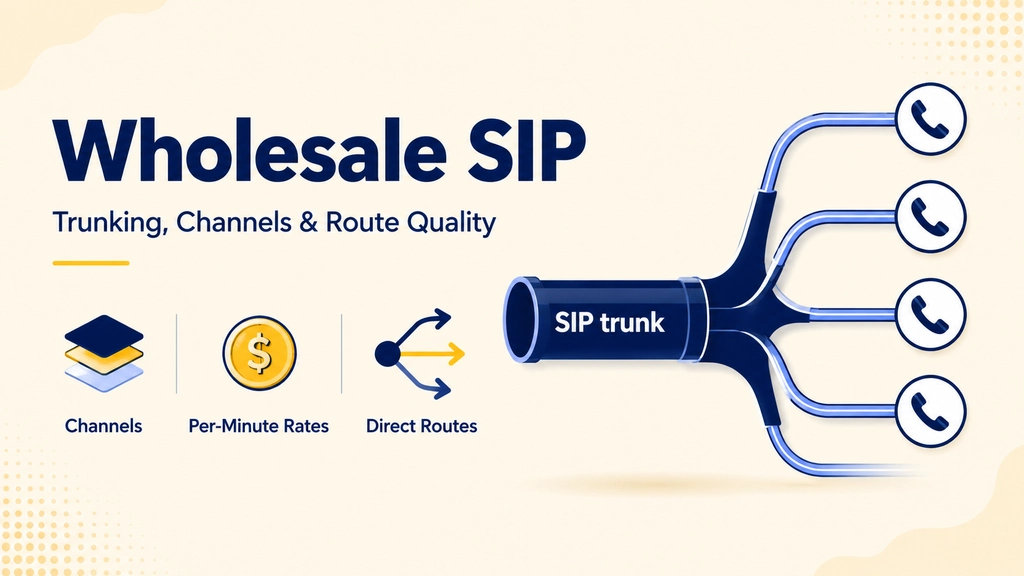
Wholesale SIP is buying SIP trunk capacity at carrier rates to resell or run at scale, rather than paying per seat. This guide covers how it differs from retail trunking, how channels and minutes are priced, and what to check before signing.
Wholesale VoIP

Wholesale SIP Trunking Explained: Channels, Minutes & Margin

Wholesale SIP Trunking Explained: Channels, Minutes & Margin
Table of Contents
  • 1.Introduction
  • 2.Wholesale vs retail SIP
  • 3.How it is priced
  • 4.Route quality
  • 5.Reseller economics
  • 6.Choosing a provider
  • 7.Key takeaways
  • 8.Conclusion
  • 9.FAQ

Introduction

Wholesale SIP is SIP trunking bought at carrier rates and in volume, rather than per seat from a retail provider. It is what sits underneath most business phone services, whether the end customer knows it or not.

The buyers are resellers, ITSPs, contact centres, and enterprises with enough traffic that retail per-user pricing stops making sense. They buy capacity and minutes wholesale, then either resell them or consume them internally.

  • Wholesale SIP is priced on channels and minutes, not on users or seats.
  • It is bought by resellers and high-volume operators who need margin, not just a phone system.
  • Route quality varies far more than headline rates do — the cheapest minute is rarely the best one.
  • Most agreements pair trunk capacity with wholesale VoIP termination so calls actually complete.

How Wholesale SIP Differs From Retail SIP Trunking

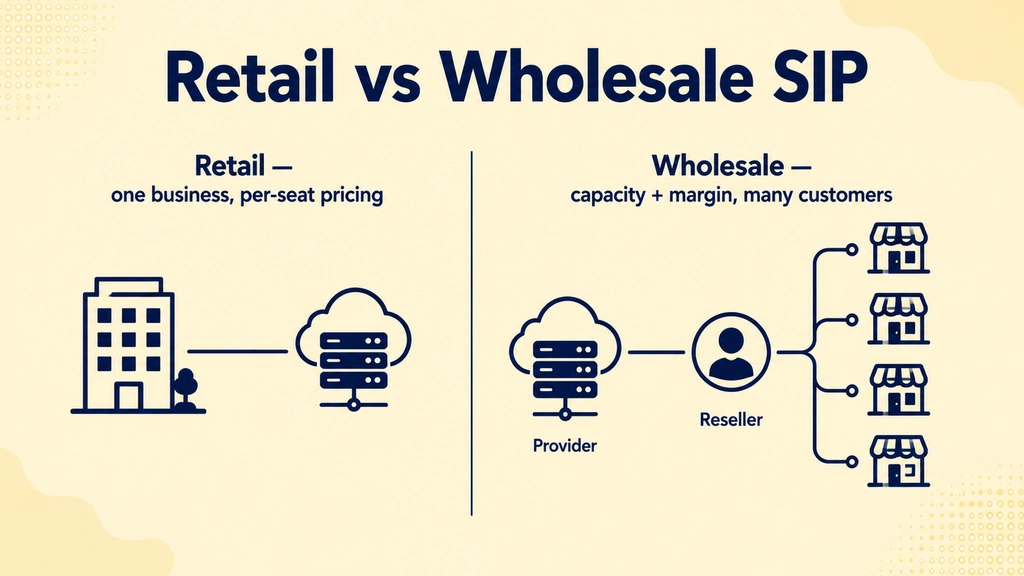
A retail SIP trunk is sold to a business to run its own phone system. Pricing is usually per seat or per channel, support is hands-on, and the provider expects one customer behind it.

Wholesale is a different commercial relationship. You buy capacity in volume at carrier rates, on the understanding that you handle your own provisioning, support, and end customers. The provider gives you routes and interconnects; what you build on top is yours.

Retail SIP trunkingWholesale SIP
Priced onSeats or channels, fixed monthlyChannels plus per-minute rates, volume-tiered
Typical buyerA single businessResellers, ITSPs, contact centres, carriers
Support modelEnd-user support includedNOC-to-NOC; you support your own customers
ProvisioningManaged for youSelf-service via portal or API
MarginNone — you are the end userThe point of the arrangement
Side-by-side comparison of a retail SIP trunk sold to one business versus a wholesale SIP arrangement feeding a reseller with multiple end customers
Retail trunking serves one business; wholesale gives a reseller the capacity and margin to serve many.

How Wholesale SIP Is Priced

Wholesale pricing usually has two components, and confusing them is the most common costing mistake resellers make.

Channels — your concurrent capacity

A channel is one simultaneous call. Twenty channels means twenty calls at once, regardless of how many extensions or users sit behind them. This is a recurring capacity cost, charged whether the channels are busy or idle.

Sizing channels is a busy-hour exercise, not a headcount one. A fifty-person office rarely needs fifty channels; a ten-agent outbound team might need more than you would expect.

Minutes — what the traffic costs

On top of capacity, calls are billed per minute at destination-specific rates. Domestic rates are typically a fraction of a cent; international varies enormously by country and by route quality.

Rate decks are usually tiered by volume and revised regularly, so the sheet you sign on is not the one you will be running in six months. Our guide to wholesale VoIP termination rates covers how those decks are structured.
Why Route Quality Decides More Than Price

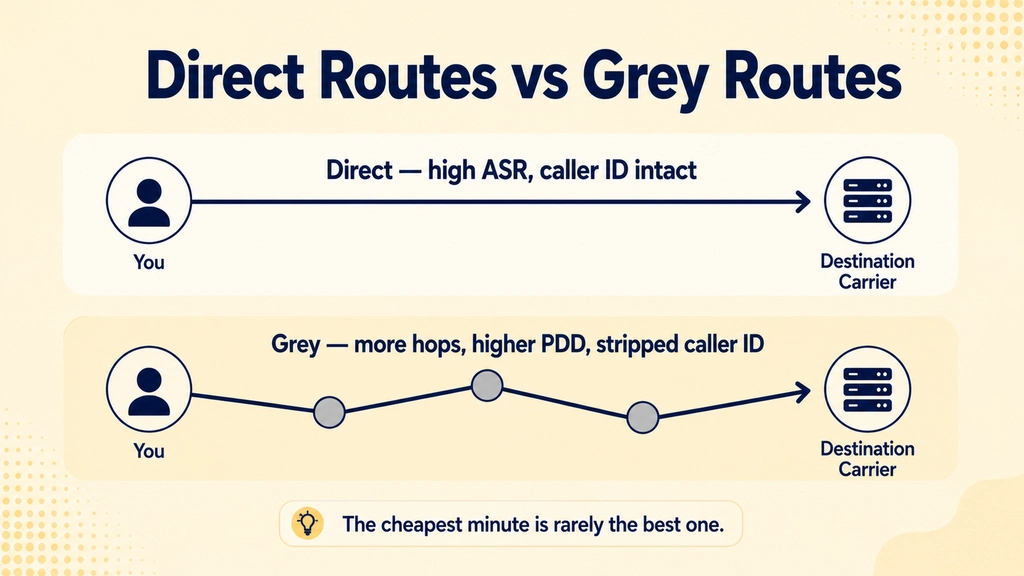
Diagram contrasting a direct high-quality SIP route with a multi-hop grey route showing degraded answer rates and audio quality
Cheap routes usually mean more hops, worse answer rates, and caller ID that does not survive the journey.

Every wholesale provider will show you a competitive rate deck. The difference between them is what happens to the call after it leaves your network.

The numbers worth asking for

MetricWhat it tells youWhy it matters commercially
ASRAnswer-seizure ratio — calls answered vs attemptedLow ASR means paying to attempt calls nobody takes
ACDAverage call durationVery short ACD suggests calls failing after connect
MOSMean opinion score — perceived audio qualityWhat your customers actually complain about
PDDPost-dial delay before ringbackLong PDD makes callers hang up before connect

Grey routes are the trap here. They price aggressively by taking more hops through intermediaries, which is where caller ID gets stripped, PDD climbs, and audio quality falls apart. A cheaper minute that fails to connect is not cheaper.

The Economics of Reselling Wholesale SIP

For a reseller, the arithmetic is straightforward but unforgiving. You buy channels and minutes wholesale, sell a packaged service retail, and your margin is the gap minus everything it costs you to run.

What eats the margin

  • Idle channel cost. Capacity billed monthly whether used or not — oversizing quietly destroys margin.
  • Support load. Wholesale is NOC-to-NOC, so every end-user question lands on you.
  • Fraud exposure. A compromised account can generate thousands in premium-rate traffic overnight.
  • Rate deck changes. Wholesale rates move; retail prices you have already quoted often cannot.

The fraud point deserves weight. Toll fraud is the single fastest way for a reseller to lose a year of margin in a weekend, and wholesale accounts are a favoured target precisely because capacity is large.

Ask any prospective provider what fraud controls exist by default: spend caps, destination blocking, velocity alerts, and whether anyone is watching outside business hours.

What to Check Before Signing

Rate decks are easy to compare and tell you the least. These are the questions that reveal what you are actually buying.

  • Are routes direct or resold? Ask how many hops sit between you and the terminating carrier.
  • What ASR and PDD do they publish? Vague answers here usually mean the numbers are unflattering.
  • Is there an API for provisioning? Manual ticket-based provisioning does not scale past a handful of customers.
  • How fast can channels be added? Hours versus weeks decides whether you can accept a large customer.
  • What fraud controls run by default? Caps and alerts should be standard, not an upgrade.
  • Is termination on the same network? One vendor for capacity and routes means one place to escalate.
📞 Wholesale SIP Trunking on Ajoxi
Direct routes with published ASR and PDD, API provisioning, fraud caps enabled by default, and channels that scale in hours. Capacity and termination on a single network, with rates quoted upfront.

Request a Quote →

Key Takeaways

  • Wholesale SIP is priced on channels plus per-minute rates, not per user or seat.
  • A channel is one concurrent call — size it against your busy hour, not your headcount.
  • ASR, ACD, MOS, and PDD tell you more about a provider than the rate deck does.
  • Grey routes look cheap because they add hops, which costs you answer rates and caller ID.
  • Idle channels and toll fraud are the two things that quietly destroy reseller margin.
  • Buying trunk capacity and termination from one network gives you a single place to escalate.

Conclusion

Wholesale SIP is not complicated, but it rewards asking unglamorous questions. Channels and minutes are easy to compare; route quality, provisioning speed, and fraud controls are what determine whether the arrangement works at scale.

If you are reselling, treat the rate deck as the starting point rather than the decision. The provider that publishes its answer rates and caps your fraud exposure by default will usually cost less over a year than the one with the lowest headline minute.

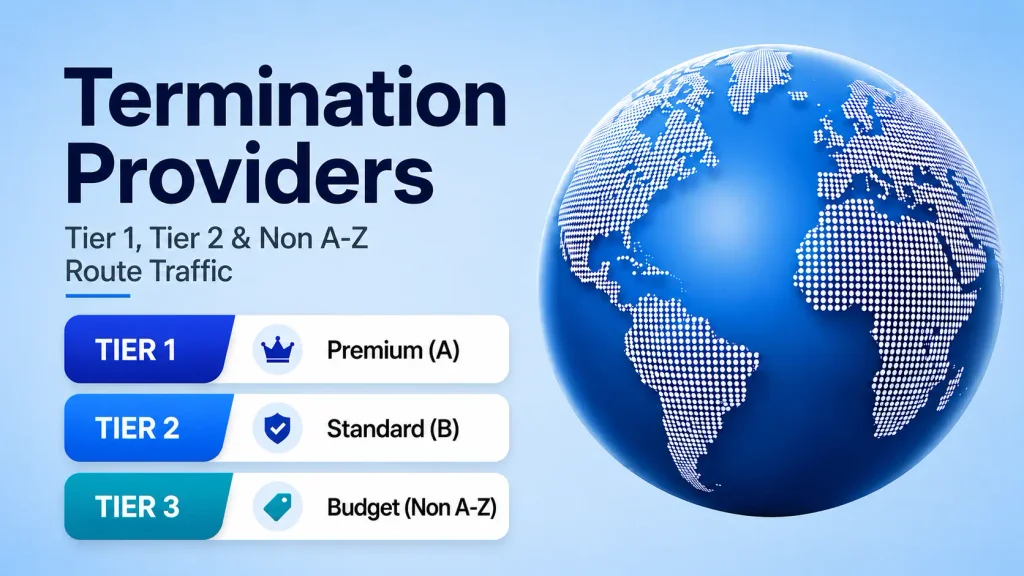
Wholesale VoIP Termination Providers: How to Choose the Right Partner

Tier-1 vs Tier-2 vs gray-market providers, the six evaluation criteria that matter, and a practical sequence for trial routing before you commit volume.

Read the article

Frequently Asked Questions

What is wholesale SIP?

Wholesale SIP is SIP trunk capacity bought at carrier rates and in volume, rather than per seat from a retail provider. It is typically purchased by resellers, ITSPs, contact centres, and enterprises with enough call traffic that retail per-user pricing becomes uneconomical.

How is wholesale SIP different from retail SIP trunking?

Retail trunking is sold to a single business at a per-seat or fixed monthly price, with end-user support included. Wholesale is priced on channels plus per-minute rates at carrier tiers.

With wholesale you handle your own provisioning and support your own customers, which is what creates the margin.

What is a SIP channel?

A channel is one simultaneous call. Twenty channels means twenty concurrent calls regardless of how many users or extensions sit behind them. Channels are a recurring capacity cost, billed whether they are in use or idle.

How many SIP channels do I need?

Size against your busy hour rather than your headcount. Pull peak simultaneous call counts from your switch or SBC over a normal week and add headroom for growth.

A fifty-person office rarely needs fifty channels, while a small outbound team may need more than expected.

What is ASR and why does it matter?

ASR is answer-seizure ratio — the proportion of call attempts that are answered. Low ASR means you are paying to attempt calls that never connect, which erodes margin and frustrates customers. It is one of the clearest indicators of route quality.

What are grey routes?

Grey routes reach a destination through additional intermediaries rather than a direct carrier interconnect. They price aggressively, but the extra hops typically mean caller ID is stripped, post-dial delay increases, and audio quality suffers — so a cheaper minute often costs more in practice.

How do I protect a wholesale SIP account from toll fraud?

Insist on spend caps, destination blocking for high-risk countries, and velocity alerts as standard rather than paid extras.

Ask whether anyone monitors outside business hours — most serious fraud runs over a weekend, when a compromised account can generate very large premium-rate charges before anyone notices.

Run your voice on Ajoxi.

AI receptionists, wholesale routes, virtual numbers — built on one platform with transparent pricing and a 24/7 NOC.
See pricing Talk to us
Keep Reading

Related reading

Hand-picked next reads from the Ajoxi blog.

Wholesale VoIP Termination Providers: How to Choose the Right Partner
Wholesale VoIP

Wholesale VoIP Termination Providers: How to Choose the Right Partner

Tier-1 vs Tier-2 vs gray-market providers, the six evaluation criteria that matter, and a practical sequence for trial routing before you commit volume.

Read article
Wholesale VoIP Termination Rates: What Your Rate Card Isn't Telling You
Wholesale VoIP

Wholesale VoIP Termination Rates: What Your Rate Card Isn't Telling You

The gap between rate-card pricing and effective cost — billing increments, ASR, ACD, PDD, FAS, and regulatory layers that move your real per-connected-minute price.

Read article
Wholesale VoIP Reseller Program: How to Start, Scale & Protect Margins
Wholesale VoIP

Wholesale VoIP Reseller Program: How to Start, Scale & Protect Margins

The margin stack behind a wholesale reseller business, who the model suits, what to look for in a program, and how to go from account creation to live traffic in under an hour.

Read article