213 Area Code: Downtown Los Angeles Numbers and How to Get One
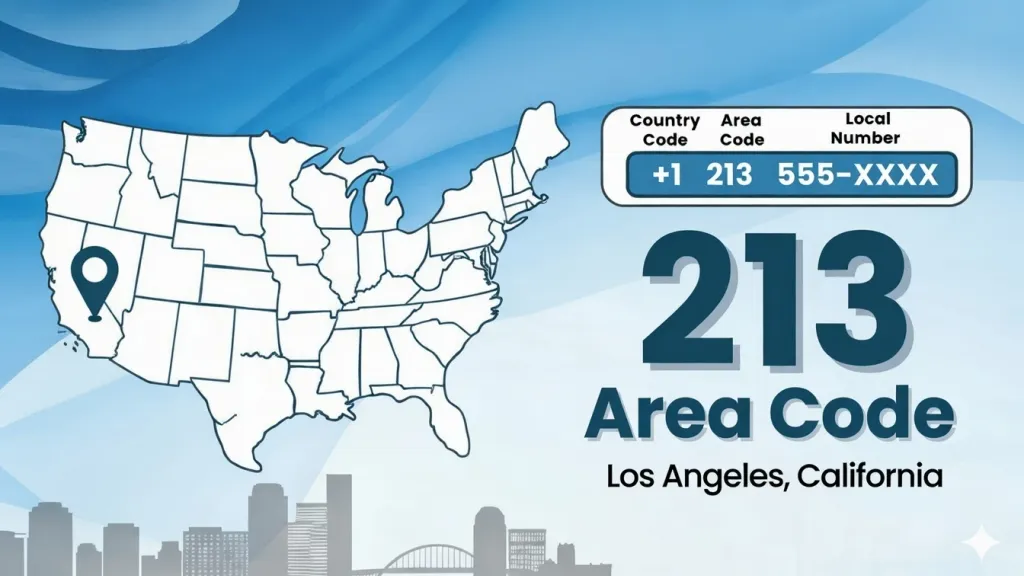
The 213 area code is the original Los Angeles code — the one that has wrapped Downtown LA, Koreatown, and the central neighborhoods since 1947. For a business that wants to sound unmistakably like the heart of LA, no other code carries the same weight.
Area Codes
213 Area Code: Downtown Los Angeles Numbers and How to Get One
Introduction
Few area codes are as instantly recognizable as 213. It is the code that has identified the center of Los Angeles since the dawn of the North American Numbering Plan, and it still anchors the busiest blocks of the city — the financial district, the civic core, the arts and fashion districts, and the dense residential neighborhoods that surround them.
When a 213 number lights up a caller ID, it reads as Los Angeles in a way that newer overlay codes simply cannot replicate. Like other marquee California codes such as the 415 San Francisco code, 213 carries instant geographic recognition.
Whether you just received a call from a 213 number, you are scouting a downtown business presence, or you are researching the code ahead of an LA expansion, this guide explains what the 213 area code covers, how its history shaped today's boundary, how dialing works, and how to get a 213 number of your own.
For a wider view of how US numbering works, see our area codes guide.
What Is the 213 Area Code?
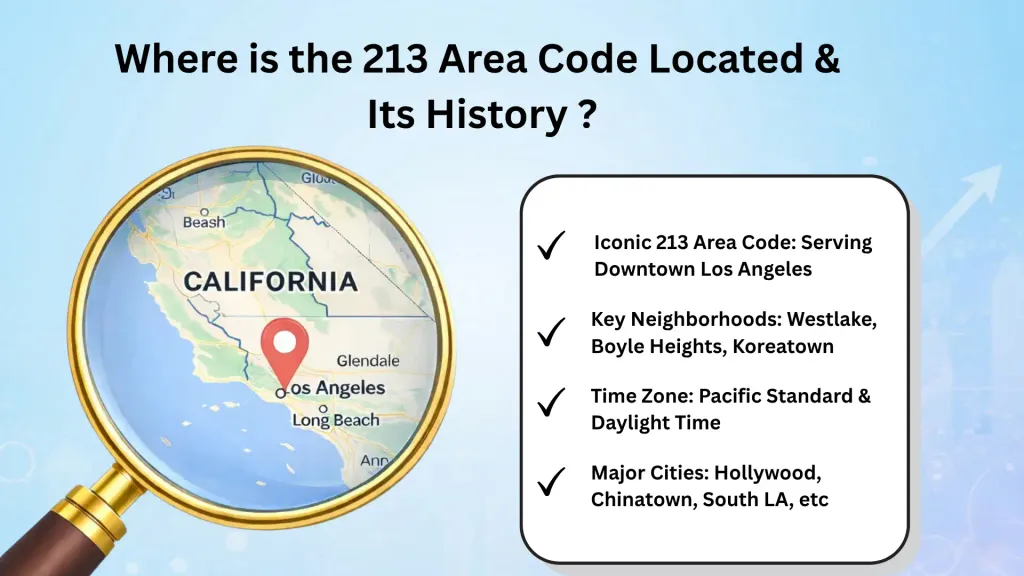
The 213 area code is a North American Numbering Plan code serving the urban core of Los Angeles, California. It covers Downtown LA along with surrounding central neighborhoods including Koreatown, Boyle Heights, Echo Park, and large portions of central Los Angeles.
It is one of the original area codes assigned in 1947 when the numbering plan was first established, which makes it one of the oldest codes in the country and the founding code for all of Southern California. The region operates in Pacific Time.
Geographically, 213 today is small and concentrated. It is no longer a sprawling regional code but a tight wrap around the densest, most economically active part of the city — the high-rises of the financial core, the courthouses and city hall of the civic center, and the historic neighborhoods immediately around them.
213 covers the urban core of Los Angeles.
How 213 Shrank to the Core: The 323 Overlay
When 213 was created in 1947, it covered a vast stretch of Southern California. Over the following decades, splits carved away the suburbs and outlying counties until 213 was left covering the city of Los Angeles itself. The most consequential change came in 1998, when the 323 area code was introduced.
The 323 split took the ring of neighborhoods surrounding downtown — Hollywood, the Eastside beyond the core, South LA, and more — leaving 213 to serve just the central downtown district.
Later, as both codes filled up, 323 was reorganized as an overlay that rejoined the central area, so the two codes now coexist across overlapping territory. The practical result for callers is that 213 and 323 share the same general region, but 213 remains the prestige code tied specifically to the downtown core. New numbers may be issued from either code depending on availability.
Dialing a 213 Number and the Time Zone
Because Los Angeles is served by multiple overlapping area codes, 10-digit dialing is mandatory throughout the region. Callers must dial the full 213 + the 7-digit local number even for a call across the same street. International callers dial their country's international access prefix, then 1 (the US country code), then 213, then the 7-digit local number.
The 213 region observes Pacific Time — Pacific Standard Time (UTC-8) in winter and Pacific Daylight Time (UTC-7) during daylight saving. For businesses serving customers on the East Coast, that is a three-hour difference, which matters when scheduling call windows and staffing support lines.
Why Businesses Choose a 213 Number
A 213 number signals that a business is rooted in the heart of 323 area, and that perception has real commercial value. Downtown LA concentrates law firms, financial services, entertainment companies, fashion and apparel wholesalers, hospitality, and a fast-growing residential population. A local 213 line tells customers in that market that you belong there.
Local presence — central-LA customers answer 213 calls more readily than unfamiliar out-of-area codes
Brand prestige — as an original 1947 code, 213 carries authentic LA heritage that overlay codes lack
Branch expansion — establish a downtown presence without leasing physical office space
Call tracking — route and measure campaigns aimed at the LA core separately from other regions
Portability — a 213 number stays with your business under FCC number-portability rules even if you change providers
What a 213 number offers businesses.
How to Get a 213 Area Code Number
Provisioning a 213 number through a modern provider takes three steps:
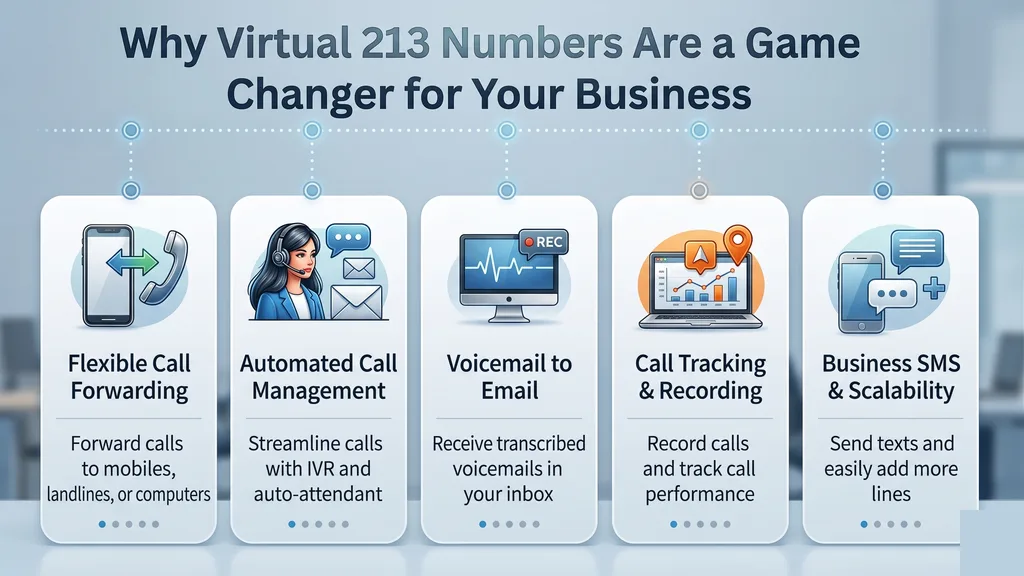
Choose the number type — a local 213 DID for downtown presence, a business line, or a memorable vanity pattern. A virtual number lets you carry a 213 line without any on-site hardware. Because 213 is an original code, prime patterns can be in tight supply
Reserve from available inventory — confirm a 213 number is available; specific prefixes or repeating-digit patterns may carry a one-time fee
Configure routing — point inbound calls to your softphone, IP-PBX, contact-center platform, or mobile device using SIP forwarding or call-forward rules
Most numbers go live within 24 to 48 hours from order to first inbound call, and they remain fully portable afterward.
Conclusion
The 213 area code is more than a routing prefix — it is shorthand for the center of Los Angeles. Since 1947 it has identified the city's downtown core, and even after the 323 overlay rearranged the surrounding neighborhoods, 213 still carries the prestige of the original LA code.
For any business whose customers are in Downtown LA, Koreatown, Echo Park, or Boyle Heights, a 213 number is worth the tighter inventory.
Frequently Asked Questions
Where is the 213 area code located?
The 213 area code covers the urban core of Los Angeles, California — Downtown LA along with surrounding central neighborhoods including Koreatown, Boyle Heights, Echo Park, and large parts of central Los Angeles. It is geographically small, concentrated on the densest and most economically active part of the city. The region operates in Pacific Time.
Is 213 one of the original area codes?
Yes. The 213 area code is one of the original codes assigned in 1947 when the North American Numbering Plan was first established. It was the founding area code for all of Southern California, which makes it one of the oldest and most recognizable codes in the country.
What is the difference between 213 and 323?
The 323 area code was created in 1998 by splitting off the neighborhoods that ring downtown Los Angeles — Hollywood, South LA, and the broader Eastside — leaving 213 for the downtown core. Later, 323 was reorganized as an overlay that rejoined the central area, so the two codes now share overlapping territory. 213 remains the prestige code tied specifically to the downtown core.
Do I have to dial 10 digits for a 213 number?
Yes. Because Los Angeles is served by multiple overlapping area codes, 10-digit dialing is mandatory. You must dial the full 213 plus the seven-digit local number for every call, even one within the same neighborhood. International callers add their country's access prefix and the US country code 1 before the 213.
How do I get a 213 phone number for my business?
Choose the number type you want (a local 213 DID, business line, or vanity pattern), reserve an available number from inventory, and configure routing to your softphone, PBX, or mobile device. Because 213 is an original code, prime patterns can be limited, but most numbers go live within 24 to 48 hours and remain portable under FCC rules.
Run your voice on Ajoxi.
AI receptionists, wholesale routes, virtual numbers — built on one platform with transparent pricing and a 24/7 NOC.