510 Area Code: East Bay Numbers for Oakland and Berkeley
The 510 area code is the identity of California's East Bay — Oakland, Berkeley, and the cities that line the eastern shore of San Francisco Bay. For a business serving this diverse, economically dense region, a 510 number is the local signal customers trust.
Area Codes
510 Area Code: East Bay Numbers for Oakland and Berkeley
Introduction
The East Bay is a world of its own within the San Francisco Bay Area — home to a major port, a flagship university, a thriving arts and food scene, and a population that prizes its distinct local identity.
The 510 area code is the phone code that holds all of it together, and after more than three decades in use it has become a genuine marker of East Bay belonging.
Whether a 510 number just rang your phone, you are planning an East Bay business presence, or you want to understand the code and how to spot 510 spam, this guide covers the territory it serves, dialing rules, why businesses choose it, call safety, and how to get a 510 number.
What Is the 510 Area Code?
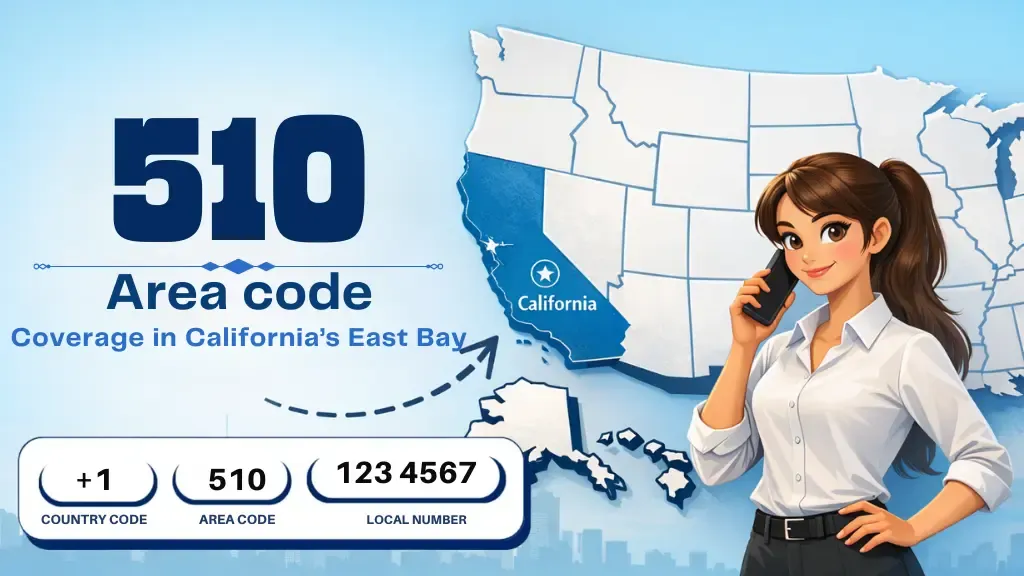
The 510 area code is a North American Numbering Plan code serving California's East Bay, the region along the eastern shore of San Francisco Bay. It was created in 1991 when it split from the original 415 area code, taking the East Bay communities into a code of their own.
In the 2020s, an overlay code, 341, was added to the same geography to keep up with demand. The region operates in Pacific Time.
Cities served by the 510 area code include:
Oakland — the largest city in the East Bay and a major Pacific port
Berkeley — home to the University of California, Berkeley
Fremont — a southern East Bay technology and manufacturing center
Hayward and San Leandro — central East Bay commercial hubs
Richmond — a northern East Bay industrial and waterfront city
Alameda — the island city across the estuary from Oakland
510 covers Oakland, Berkeley, and the East Bay.
Dialing a 510 Number and the Time Zone
With the 341 overlay now sharing the same territory, 10-digit dialing is mandatory across the 510 region. Callers dial the full 510 (or 341) plus the seven-digit local number for every call, even within the same city. International callers dial their country's international access prefix, then 1 (the US country code), then 510, then the seven-digit local number.
The 510 region observes Pacific Time — Pacific Standard Time (UTC-8) in winter and Pacific Daylight Time (UTC-7) during daylight saving. Businesses serving East Coast customers should account for the three-hour difference when scheduling calls and support hours.
Why Businesses Choose a 510 Number
The East Bay economy blends shipping and logistics around the Port of Oakland, biotech and research tied to UC Berkeley and the national labs, advanced manufacturing in Fremont, healthcare, and a celebrated small-business culture of restaurants, makers, and creative firms.
A local 510 number tells these customers a business is part of the East Bay rather than an outsider, much as a 209 area code signals belonging in Stockton or Modesto.
Local presence — East Bay customers answer 510 calls more readily than unfamiliar codes
Regional identity — "the 510" is widely used as shorthand for the East Bay itself, lending genuine local credibility
Branch expansion — establish an East Bay presence without leasing office space
Call tracking — measure East Bay campaigns separately from San Francisco and other markets
Portability — a 510 number stays with your business under FCC number-portability rules if you change providers
510 Spam, Spoofing, and STIR/SHAKEN
Like every active area code, 510 is sometimes abused by scammers who spoof local numbers — a tactic called "neighbor spoofing," where a fake caller ID shows a 510 prefix matching your own so the call looks local and trustworthy. The number you see may have nothing to do with the actual caller.
Common 510 scam patterns include fake bank-fraud alerts, utility shut-off threats, and tech-support impersonation.
The industry defense is STIR/SHAKEN, a set of caller-ID authentication standards that US carriers are required to implement. STIR/SHAKEN lets a receiving carrier verify that the calling number was not illegitimately spoofed, and many phones now display a "verified" or "scam likely" label as a result.
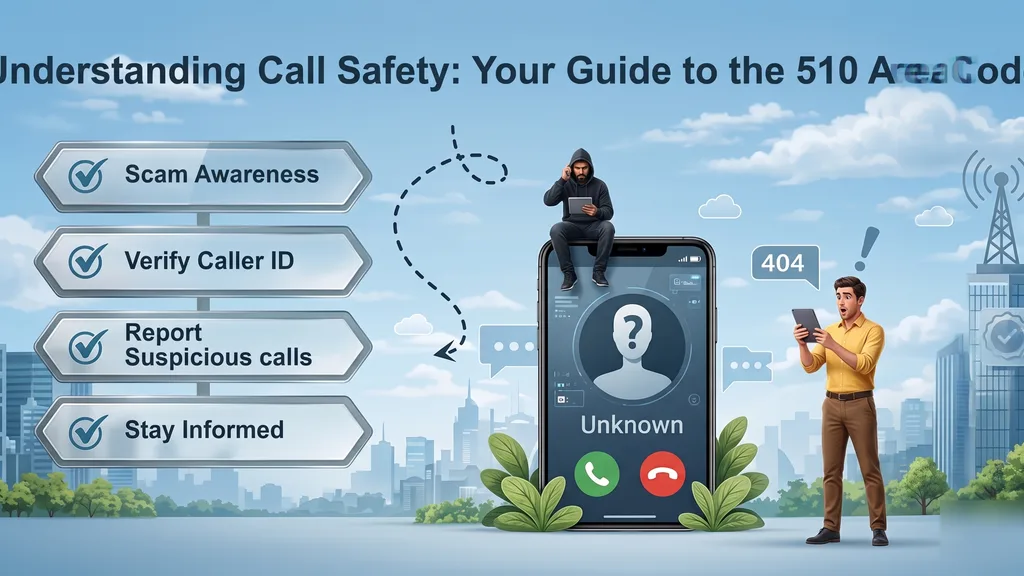
To protect yourself, do not trust a 510 caller ID on its own, never share codes or payment details with an unexpected caller, hang up and call the organization back on a number you look up independently, and use your phone's built-in spam filtering and call-blocking tools.
Staying safe from 510 spam and spoofing.
How to Get a 510 Area Code Number
Provisioning a 510 number through a modern provider takes three steps:
Choose the number type — a local 510 DID for East Bay presence, a business line, or a vanity pattern. A cloud virtual phone number carries the 510 code without any on-premise equipment
Reserve from available inventory — confirm a 510 number is available; specific prefixes or memorable patterns may carry a one-time fee
Configure routing — direct inbound calls to your softphone, IP-PBX, contact-center platform, or mobile device using SIP forwarding or call-forward rules
Most numbers go live within 24 to 48 hours from order to first inbound call, and they remain fully portable afterward.
Conclusion
The 510 area code is the East Bay's own — split from 415 in 1991 and now a true badge of regional identity from Oakland and Berkeley to Fremont, Hayward, Richmond, and Alameda. With the 341 overlay keeping inventory healthy and STIR/SHAKEN helping curb spoofed calls, a 510 number remains one of the strongest local signals a Bay Area business can carry.
Frequently Asked Questions
Where is the 510 area code located?
The 510 area code covers California's East Bay along the eastern shore of San Francisco Bay, including Oakland, Berkeley, Fremont, Hayward, Richmond, Alameda, and San Leandro. It operates in Pacific Time.
When was the 510 area code created?
The 510 area code was created in 1991 when it split from the original 415 area code, giving the East Bay its own distinct code. In the 2020s an overlay code, 341, was added to the same geography to provide additional number capacity.
What is the 341 area code overlay?
The 341 area code is an overlay of 510 introduced in the 2020s. It covers the exact same East Bay territory as 510 and exists to supply new numbers as 510 inventory tightens. The overlay is the reason 10-digit dialing is mandatory throughout the region.
How can I tell if a 510 call is spam?
Scammers often spoof 510 numbers through "neighbor spoofing," showing a local-looking caller ID that is not real. Be cautious with unexpected calls claiming to be from banks, utilities, or tech support, never share codes or payments, and hang up and call the organization back on a number you look up yourself. STIR/SHAKEN caller-ID authentication and your phone's built-in spam filtering help flag suspicious calls.
How do I get a 510 phone number for my business?
Choose the number type (a local 510 DID, business line, or vanity pattern), reserve an available number from inventory, and configure routing to your softphone, PBX, or mobile device. Most numbers go live within 24 to 48 hours and remain portable under FCC rules.
Run your voice on Ajoxi.
AI receptionists, wholesale routes, virtual numbers — built on one platform with transparent pricing and a 24/7 NOC.