
Ajoxi
  • Pillar
    CLOUD PHONE

    Cloud phone, messaging, video, fax, chat — the full UCaaS stack.

    • Business PhoneCalling, SMS, video, one login
    • Customer EngagementEvery channel, one thread
    • Personal AIAI sidekick for every rep
    • SMS & MMSText from the main business line
    • Team ChatInternal chat, tied to customers
    • Video MeetingsRooms with AI notes + recap
    • Online FaxFax without the fax machine
    • Website ChatbotAuto-resolves order status & returns
    • Phone SystemModern PBX with AI built in
    Featured
    Everything included.
    Cloud phone, AI contact center, AI Receptionist, SMS, video, 300+ integrations.
    See plans & pricing
  • Core Capabilities
    • AI Receptionist24/7 first answer · 32 languages
    • AI SentimentRoutes upset callers automatically
    • AI Agent AssistWhisper scripts + next-best-action
    • Conversation IntelligenceTranscripts, sentiment, objections
    • Call RecordingFull fidelity + keyword search
    • Auto-attendantDrag-and-drop visual IVR builder
    • Supervisor ToolsListen · whisper · barge · audit log
    • Toll-free Numbers800, 888, 877 — provisioned fast
    New
    AI Sentiment · live scoring.
    Routes upset customers to senior agents the moment sentiment dips. On every paid plan.
    See AI Sentiment
  • By Industry & Team
    • FinanceSOC 2 · FINRA-ready audit trails
    • RetailOmnichannel + cart-recovery SMS
    • SaaSAPIs + Personal AI on every seat
    • LogisticsMulti-site dispatch routing
    • Sales TeamsPower dialer + live AI coaching
    • Support TeamsShared memory across 8 channels
    • Remote TeamsSame number on every device
    • SMBAI receptionist as your front desk
    • Enterprise ITSSO, SCIM, multi-site governance
    Most adopted
    A calling stack compliance trusts.
    Call recording, STIR/SHAKEN, sentiment routing. SOC 2, PCI, and FINRA-ready audit trails.
    See finance
  • Native Sync
    • HubSpotTwo-way sync · lifecycle triggers
    • ZohoCRM · Desk · Books · Bigin
    Coming soon
    Salesforce. Pipedrive. Freshsales.
    All three native two-way syncs in Q3 2026. Want a heads-up on launch?
    Email me on launch
  • Pricing
  • Learn
    • BlogEngineering & product notes
    • Customer storiesReal outcomes, real numbers
    • GuidesStep-by-step playbooks
    • WebinarsLive every Thursday · on-demand
    • Contact UsTalk to sales or get support
    Build
    • DocsHow everything works
    • API referenceREST + webhooks
    • SDKsNode, Python, Go, Ruby
    • ChangelogEvery ship, in one place
    Trust
    • Status pageLive uptime + incidents
    • Security + complianceSOC 2 · GDPR · PCI
    • PrivacyWhat we collect & why
    • TermsThe contract, in chapters
    Fresh ink
    8,400 calls, measured.
    AI receptionist accuracy by language, accent, and call type — the unedited numbers.
    Read the post
Sign inFree Trial
Cloud Phone
Business PhoneCalling, SMS, video, one loginCustomer EngagementEvery channel, one threadPersonal AIAI sidekick for every repSMS & MMSText from the main business lineTeam ChatInternal chat, tied to customersVideo MeetingsRooms with AI notes + recapOnline FaxFax without the fax machineWebsite ChatbotAuto-resolves order status & returnsPhone SystemModern PBX with AI built in
Contact Center
OmnichannelOne queue for every channelOutbound DialerPredictive, power, previewAgent AssistLive whisper coachingSupervisor AssistSpot bad calls in real timeInteraction AnalyticsAuto-QA, topic trendsEnterprise500+ seat operations
AI Family
Ajoxi VoiceAI Receptionist that books appointmentsAI AssistantDrafts, summaries, follow-upsConversation AIReads every call so you don't miss a thing
AI Receptionist24/7 first answer · 32 languagesAI SentimentRoutes upset callers automaticallyAI Agent AssistWhisper scripts + next-best-actionConversation IntelligenceTranscripts, sentiment, objectionsCall RecordingFull fidelity + keyword searchAuto-attendantDrag-and-drop visual IVR builderSupervisor ToolsListen · whisper · barge · audit logToll-free Numbers800, 888, 877 — provisioned fast
FinanceSOC 2 · FINRA-ready audit trailsRetailOmnichannel + cart-recovery SMSSaaSAPIs + Personal AI on every seatLogisticsMulti-site dispatch routingSales TeamsPower dialer + live AI coachingSupport TeamsShared memory across 8 channelsRemote TeamsSame number on every deviceSMBAI receptionist as your front deskEnterprise ITSSO, SCIM, multi-site governance
HubSpotTwo-way sync · lifecycle triggersZohoCRM · Desk · Books · Bigin
Learn
BlogEngineering & product notesCustomer storiesReal outcomes, real numbersGuidesStep-by-step playbooksWebinarsLive every Thursday · on-demandContact UsTalk to sales or get support
Build
DocsHow everything worksAPI referenceREST + webhooksSDKsNode, Python, Go, RubyChangelogEvery ship, in one place
Trust
Status pageLive uptime + incidentsSecurity + complianceSOC 2 · GDPR · PCIPrivacyWhat we collect & whyTermsThe contract, in chapters
Sign inFree Trial
Ajoxi

Cloud phone and AI contact center on one carrier-grade network.

SOC 2GDPRPCI-DSS

Cloud Phone

  • Business Phone
  • Customer Engagement
  • SMS & MMS
  • Team Chat
  • Video Meetings
  • Phone System

Contact Center

  • Omnichannel
  • Outbound Dialer
  • Agent Assist
  • Interaction Analytics
  • Enterprise CCaaS

AI

  • AI Platform
  • AI Receptionist
  • AI Assistant
  • Conversational AI
  • AI Sentiment
  • Conversation Intelligence

Solutions

  • Finance
  • Retail & eCom
  • SaaS & Tech
  • Sales Teams
  • SMB

Reseller

  • Wholesale VoIP
  • Wholesale Voice
  • SIP Trunking
  • CLI Routes

Company

  • Pricing
  • About
  • Customers
  • Contact Us
  • Country Codes
  • Area Codes
  • Docs
  • Status
  • Security

© 2026 Ajoxi. All rights reserved.

All systems normal
  • Privacy
  • Terms
  • Sitemap
Blog/Wholesale VoIP/What Is VoIP Termination? The Complete Guide

What Is VoIP Termination? The Complete Guide

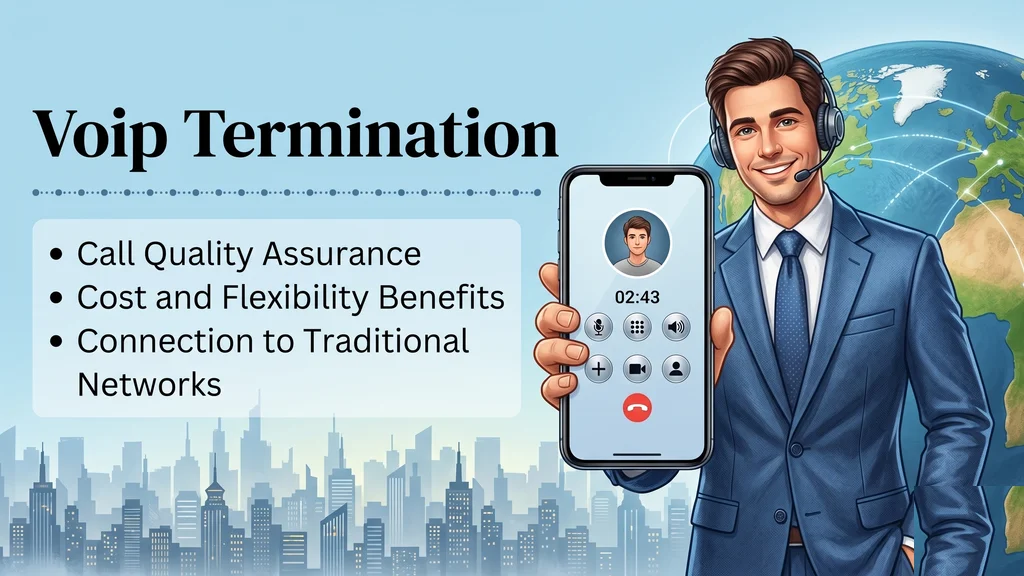
VoIP termination is the invisible step that turns a digital call into a ringing phone. This guide explains how it works, the types of termination services, the benefits, the security and quality factors that matter, and how to choose the right provider.
Wholesale VoIP

What Is VoIP Termination? The Complete Guide

What Is VoIP Termination? The Complete Guide
Table of Contents
  • 1.What it is
  • 2.How it works
  • 3.Benefits
  • 4.Types
  • 5.Choosing a provider
  • 6.Security
  • 7.Call quality
  • 8.Conclusion
  • 9.Frequently asked questions

What Is VoIP Termination?

VoIP termination is the moment a Voice over IP call stops being internet traffic and becomes a real phone ringing somewhere. A VoIP call begins life as a stream of data packets travelling over an IP network. Termination is the handoff point — where that stream is delivered onto the destination network, whether that is the legacy Public Switched Telephone Network (PSTN) or another VoIP system, and where, if the recipient is on a traditional line, the packets are converted back into the analog audio that drives an ordinary handset.

Think of it as the last mile of a voice call. A salesperson dialing from a browser-based softphone, a contact center agent on a cloud PBX, or an app placing a call all rely on termination to reach a landline or mobile number that has nothing to do with VoIP. Strip termination away and an IP call could only ever ring another IP endpoint — it would never touch the phone number written on a business card.

It matters because three things are settled at this layer. What the call costs is set here, since per-minute pricing is applied at termination. How far the call can reach depends on it, because one provider can deliver traffic to nearly any country on earth. And how clear the call sounds is decided here too, since the route, codec, and interconnect chosen during termination shape the audio. For any organization placing outbound calls in volume, choosing a voice termination is among the most consequential vendor decisions it will ever make.

How VoIP Termination Works

A single terminated call runs through five steps, and the entire sequence finishes in well under a second.

The five-stage call flow

1. Origination. The caller dials from a softphone, IP desk phone, or business app. Their voice is sampled, encoded by a codec, and broken into packets ready to travel across the IP network.

2. Signaling. Session Initiation Protocol (SIP) sets the call up — locating the far end, agreeing which codec both sides will use, and exchanging the parameters needed to open a media session.

3. Routing. The provider's softswitch looks at the dialed number and picks a carrier path to reach it, usually through least-cost routing that balances the per-minute price against live performance data rather than choosing on price alone.

4. Termination. The call arrives at a termination gateway and is passed to the destination network. When that network is the PSTN, this is where the digital stream is turned back into an analog signal.

5. Completion. The far-end phone rings, someone answers, and a live two-way audio path is open between the two parties.

Providers deliver this in one of two ways. With direct termination, the provider holds its own interconnect agreements with the destination carriers, which means tighter control over quality and quicker fixes when a route misbehaves. With indirect termination, calls hop through one or more middle carriers — often cheaper on paper, but each extra hop adds latency and removes the originating provider's ability to see and control every link, so quality becomes harder to guarantee.
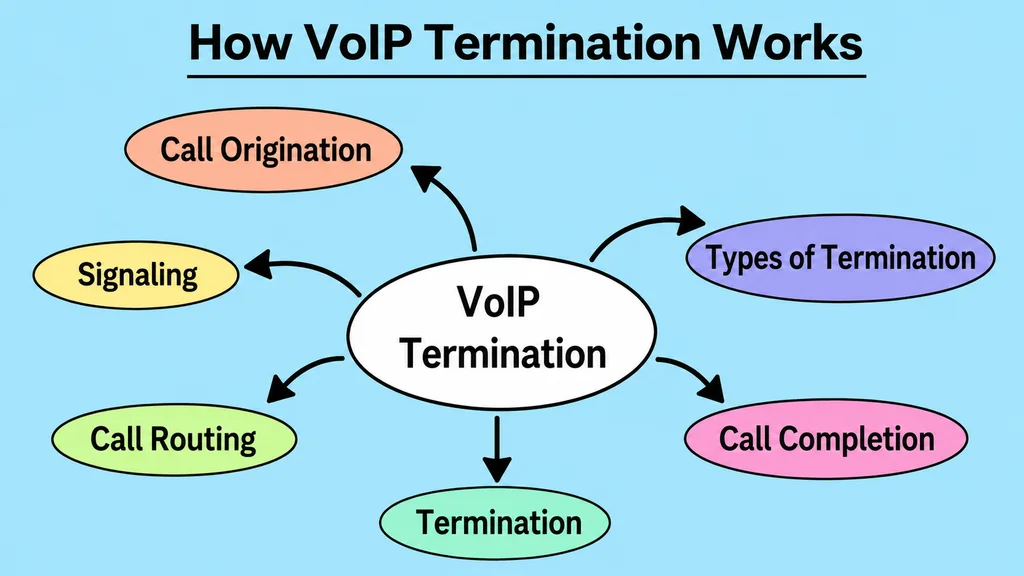
How VoIP termination works — call flow from origination through signaling, routing, termination to completion
The VoIP termination call flow — five stages from origination to completion.

The Benefits of VoIP Termination

Lower cost. Carrying calls over IP and handing them off at competitive wholesale rates undercuts legacy long-distance dramatically, and the gap is widest on international traffic. Picking the right termination partner can take a meaningful chunk out of a company's monthly voice bill.

Reliable audio. Good termination leans on efficient codecs, low-latency paths, and direct interconnects to keep calls crisp. Providers that take quality seriously watch performance metrics in real time and pull traffic off any route that starts to degrade.

Elastic capacity. There are no physical lines to order. A business can add concurrent-call headroom or light up a new destination country in hours, not the weeks a legacy carrier would need.

Modern controls. Termination platforms typically expose APIs, real-time call detail records, configurable billing increments, and route-level management — the kind of programmable control that older carriers almost never offer.

Built-in protection. Carrier-grade termination ships with encryption, authentication, and continuous fraud monitoring, guarding both the conversation itself and the account behind it from abuse.

Types of VoIP Termination Services

Termination is a category, not a single SKU. Different delivery models suit different buyers, from global carriers down to a single growing business.

  • Wholesale VoIP termination — bulk voice traffic traded business-to-business at volume pricing, used by carriers, resellers, call centers, and platforms that push millions of minutes. Buyers compare options on wholesale VoIP termination rates and shortlists of leading wholesale VoIP providers.
  • Retail VoIP termination — termination packaged for end users or smaller businesses inside a calling plan, priced higher per minute to cover the service margin.
  • SIP trunking — virtual IP trunks that link a company PBX or UCaaS platform straight to the PSTN, retiring physical PRI lines in favor of capacity that flexes on demand.
  • Managed termination — a hands-off service where the provider runs the routing, monitoring, and tuning, ideal for teams that want quality without operating the plumbing themselves.
  • Cloud-based termination — termination delivered entirely from the cloud and reached through an API, with elastic capacity and zero on-premise hardware.

How to Choose a VoIP Termination Provider

The lowest advertised rate almost never works out to the lowest real cost. Weigh any provider against the following before you point production traffic at them.

  • Quality and uptime — favor a high Answer-Seizure Ratio (ASR), low Post-Dial Delay (PDD), strong Mean Opinion Scores (MOS), and a written uptime SLA. Ask for figures broken out by destination, not a single blended network average.
  • Pricing you can verify — know the billing increment, the volume tiers, and whether you are charged only when a human actually answers. Clean, detailed CDRs are what make invoice reconciliation possible.
  • Where they reach — confirm the provider serves your target markets on quality routes, ideally over direct tier-1 interconnects rather than a chain of intermediaries.
  • Security and compliance — check for encryption, active fraud monitoring, and any certifications your sector demands, such as GDPR for regulated industries.
  • Support that answers — quick, technically competent support and a clear escalation path are what save revenue the moment a route starts to fail.

VoIP Termination Security

Because termination plugs directly into the global phone network and every call carries a charge, it is an attractive target. Knowing the threats — and the countermeasures — is part of running it responsibly. Report telecom fraud to the FTC.

The main risks

Toll fraud happens when an attacker breaks into an account or system and pumps high volumes of calls toward premium-rate or expensive international numbers, racking up charges that land on your invoice. Eavesdropping is the capture of call audio or signaling as it crosses an unprotected network. Denial-of-service attacks bury the platform under junk traffic or malformed messages to knock service offline.

How to prevent them

Robust authentication — both IP-based and credential-based — keeps unauthorized parties out. Encryption with TLS on the SIP signaling and SRTP on the media stream stops interception from yielding anything useful. Firewalls and Session Border Controllers screen hostile traffic right at the network edge. And routine auditing of call patterns, CDRs, and access logs surfaces anomalies while they are still small, long before they turn into a five-figure fraud bill.
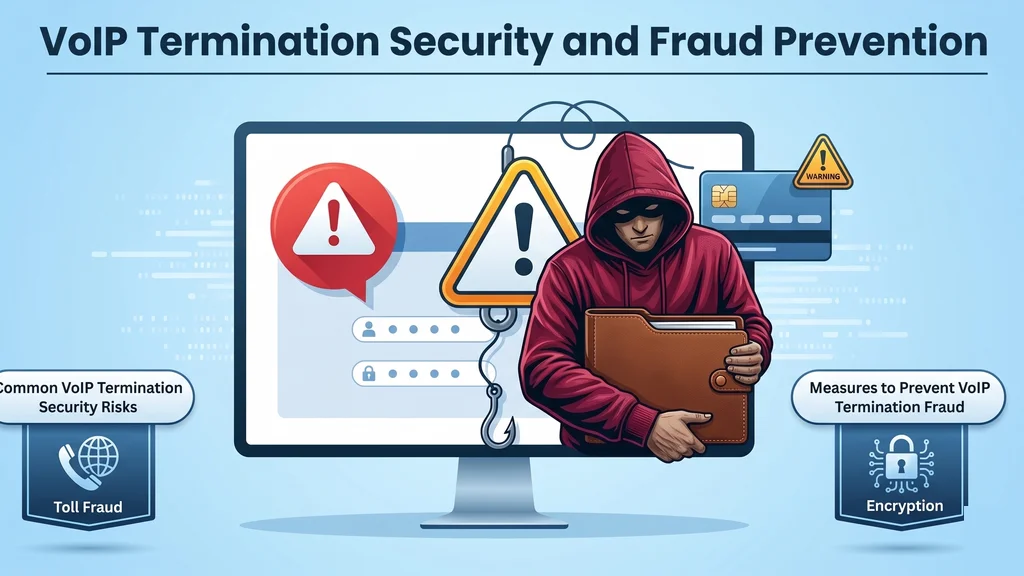
VoIP termination security and fraud prevention — authentication, encryption, firewalls and audits
Securing VoIP termination — authentication, encryption, firewalls, and regular audits.

What Determines VoIP Termination Quality

A handful of network conditions will wreck voice quality if nobody manages them. Congestion on an overloaded route drops packets and chops the audio into fragments. Latency — the lag between speaking and being heard — makes a conversation feel stilted once it climbs past roughly 150ms round-trip. Jitter, the uneven spacing of packet arrivals, garbles speech. And packet loss simply means slices of audio never arrive, leaving audible holes.

The KPIs that measure it

Four numbers tell you whether a route is usable. MOS (Mean Opinion Score) rates perceived clarity from 1 to 5, with anything above 4.0 counting as good. Packet loss should sit below 1%. Latency should stay under 150ms one-way. And jitter should be low and smoothed out by a consistent buffer.

The main lever for protecting all four is Quality of Service (QoS) — giving voice packets priority over ordinary data so calls stay clear even when the link is busy. Quality-minded termination providers pair QoS with direct interconnects and live route monitoring to hold these figures inside target ranges.

Conclusion

VoIP termination is the bridge that lets internet voice reach every phone in the world. It sets what a call costs, decides how clear it sounds, and ultimately determines whether it connects at all. Once you understand the call flow, the service types, the security model, and the quality KPIs, termination stops being a mystery and becomes a vendor decision you can actually scrutinize.

The businesses that win here are the ones that treat termination as core infrastructure — choosing partners on quality, transparency, and security instead of the cheapest headline rate — and that is what keeps their voice operations both profitable and dependable as they scale.

Best Wholesale VoIP Providers in 2026: A Practical Comparison

Seven wholesale VoIP providers compared side-by-side — what they're built for, where they shine, where they fall short. For resellers, MVNOs, BPOs, and carriers running real traffic.

Read the article

FAQ: VoIP Termination

What is VoIP termination in simple terms?

VoIP termination is the step that completes a VoIP call by delivering it to its final destination — the PSTN or another VoIP network — and, where the recipient is on a traditional line, converting the digital stream back into analog audio so their phone rings. It is what allows an internet call to reach any landline or mobile number anywhere.

What is the difference between VoIP origination and termination?

Termination is about outbound — delivering a call you place to wherever it is headed. Origination is the inbound side — receiving calls on a phone number (a DID) that routes into your VoIP platform. A full voice deployment usually needs both.

What is wholesale VoIP termination?

Wholesale VoIP termination is voice traffic sold in bulk, business-to-business, at volume per-minute rates. Carriers, resellers, call centers, and platforms buy it to reach the global phone network without building their own, and they often resell that capacity on to their own customers.

How is VoIP termination quality measured?

Quality is tracked through metrics including MOS (aim above 4.0), ASR (Answer-Seizure Ratio), PDD (Post-Dial Delay), packet loss (under 1%), latency (under 150ms one-way), and jitter. Read together, they tell you whether calls connect reliably and sound clean.

How do I keep VoIP termination secure?

Lock down access with strong authentication, encrypt signaling and media using TLS and SRTP, put firewalls and Session Border Controllers at the edge, and audit traffic and CDRs regularly so toll fraud, eavesdropping, and DoS attempts are caught while they are still small.

Run your voice on Ajoxi.

AI receptionists, wholesale routes, virtual numbers — built on one platform with transparent pricing and a 24/7 NOC.

See pricing Talk to us
Keep Reading

Related reading

Hand-picked next reads from the Ajoxi blog.

Best Wholesale VoIP Providers in 2026: A Practical Comparison
Wholesale VoIP

Best Wholesale VoIP Providers in 2026: A Practical Comparison

Seven wholesale VoIP providers compared side-by-side — what they're built for, where they shine, where they fall short. For resellers, MVNOs, BPOs, and carriers running real traffic.

Read article
Wholesale VoIP Termination Rates: What Your Rate Card Isn't Telling You
Wholesale VoIP

Wholesale VoIP Termination Rates: What Your Rate Card Isn't Telling You

The gap between rate-card pricing and effective cost — billing increments, ASR, ACD, PDD, FAS, and regulatory layers that move your real per-connected-minute price.

Read article
Wholesale Voice Services: The Infrastructure Layer Powering Global Calls
Wholesale Voice

Wholesale Voice Services: The Infrastructure Layer Powering Global Calls

A 2026 walkthrough of the five wholesale voice service types, the call-flow mechanics from origination to termination, the white vs grey vs Non-CLI route distinction, and which service profile fits which business.

Read article