VoIP-grossistpriser: vad företag betalar 2026
Hur grossistpriserna för VoIP är uppbyggda, vad som driver effektiv minutkostnad över det nominella priset och hur man utvärderar ett priskort.
Hur A-Z-terminering, originering, SIP-trunking och priskort faktiskt fungerar - skrivna för operatörer, återförsäljare, BPO:er och plattformar som köper röstminuter i stor skala.
De flesta som köper röstminuter för att leva har aldrig använt ordet "grossist" med en främling. Grossistverksamheten för VoIP ligger två lager under konsumentupplevelsen – operatörer köper minuter från operatörer, som köper från operatörer, som så småningom avslutar samtal till det offentliga nätet. Kontrakten är tysta, prissättningen ändras varje vecka och de tekniska besluten strömmar in i varje affärssamtal som korsar en landsgräns.
Den här guiden är för de personer som sitter på köpsidan av dessa kontrakt. Den täcker vad VoIP i grossistledet faktiskt är, hur priserna är strukturerade, skillnaden mellan en CLI-rutt och en icke-CLI-rutt, de tre kvalitetsmåtten som är viktiga, mönstren för avgiftsbedrägeri som utplånar marginaler och den praktiska checklistan för att välja en leverantör som fortfarande kommer att fungera om sex månader. Läs den från början till slut, eller skumma igenom avsnittet du behöver.
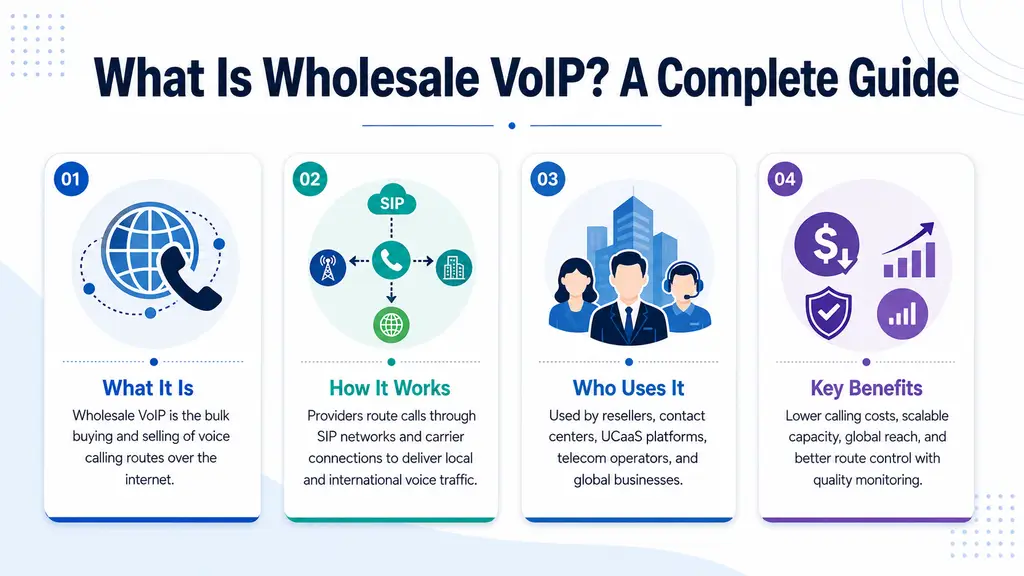
Grossistförsäljning av VoIP handlar om att sälja röstminuter i bulk mellan operatörer, snarare än till slutanvändare. En grossistleverantör sitter på Tier-1 SIP sammankopplar med teleföretag runt om i världen, köper enorma volymer termineringskapacitet till kraftigt rabatterade priser och säljer sedan den kapaciteten vidare till andra företag - återförsäljare, BPO:er, kontaktcenter, ITSP:er och plattformar - med en marginal.
Produkten är osynlig för en konsument. Ingen köper "grossist VoIP" på det sätt som de köper ett mobilabonnemang. Men bakom kulisserna har nästan varje företagsröstsamtal som korsar en landsgräns passerat minst en grossistrutt. Om ditt företag skickar eller tar emot mer än några tusen minuter per månad, betalar du med stor sannolikhet redan för grossistuppsägning – direkt eller indirekt.
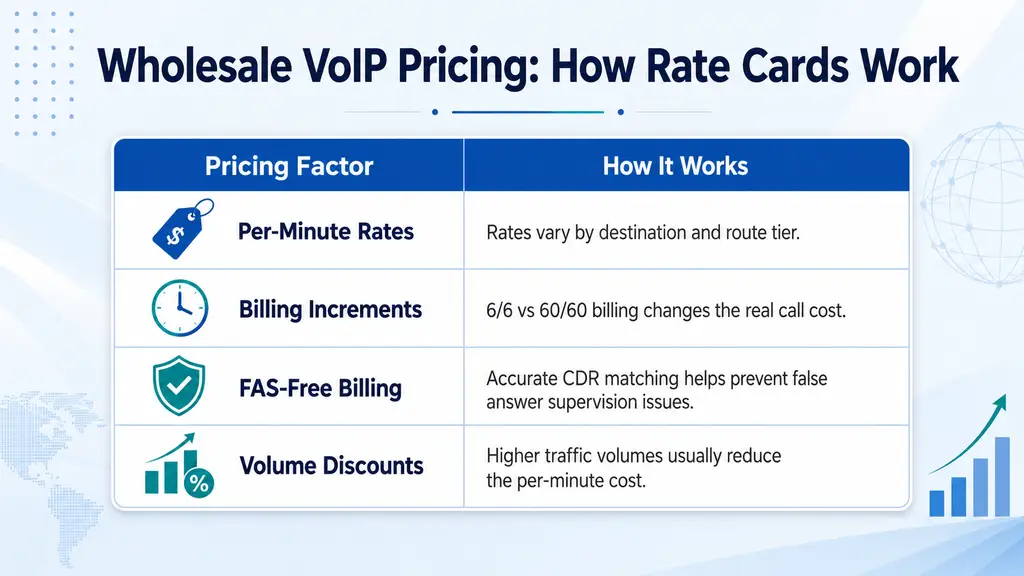
Den tekniska mekanismen är SIP (Session Initiation Protocol) över IP-transport. Två operatörer upprättar en SIP-trunk — en logisk röstförbindelse — kommer överens om en minutpris per destination och rutttrafik. Anslutningen övervakas kontinuerligt för kvalitet (fall, latens, jitter) och omförhandlas när priser eller rutter ändras.
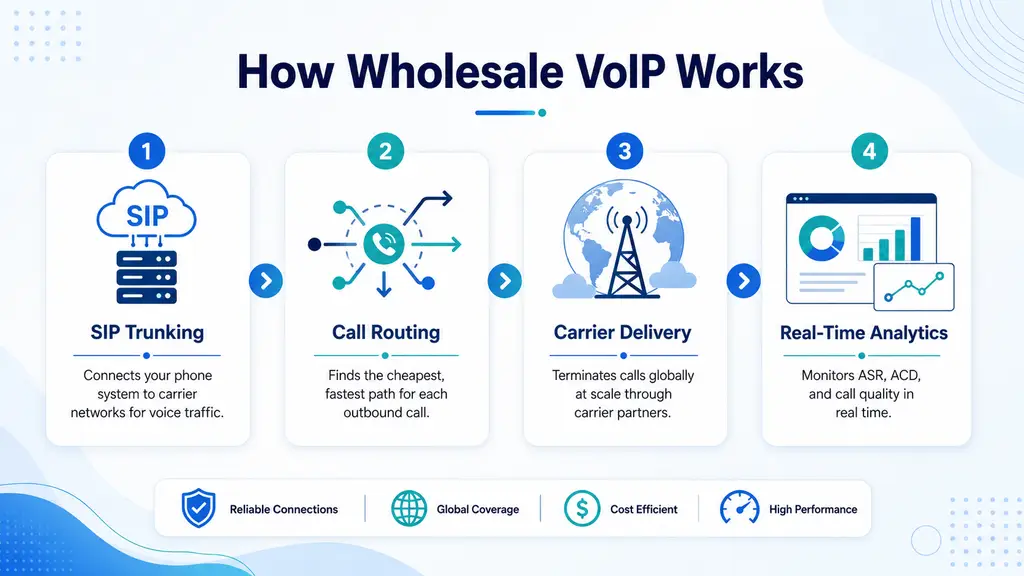
Fyra köparprofiler dominerar grossistmarknaden och var och en har väldigt olika prioriteringar.
Återförsäljare och ITSP:er köp minuter i grossistledet och packa om dem som VoIP-abonnemang för små och medelstora företag. Marginal är allt. De förhandlar fram aggressiv prissättning per minut, ofta med månatliga volymåtaganden, och ser på ASR (Answer-Seizure Ratio) som en hök.
Kontaktcenter och BPO:er köp originering (inkommande DID) och uppsägning (utgående uppringning) i ungefär lika stor volym. De bryr sig om förutsägbar latens och en enda hals-till-choke för support, eftersom varje avbrutet samtal kostar dem en SLA-straff med sina egna företagskunder.
Kommunikationsplattformar — företag som bäddar in röst i sin egen produkt (CPaaS-leverantörer, uppringningsmjukvara, verktyg för samtalsinspelning) — köper till högsta volym och bryr sig mest om API-mognad, programmatisk provisionering och global täckning i ett enda kontrakt.
Företag med internationella fotavtryck ibland köper grossist direkt för att kringgå deras detaljhandelsuppmärkning. Ett läkemedelsföretag med kontor i 14 länder kan spara 40–60 % genom att teckna ett enda grossistavtal istället för att betala 14 separata återförsäljare.
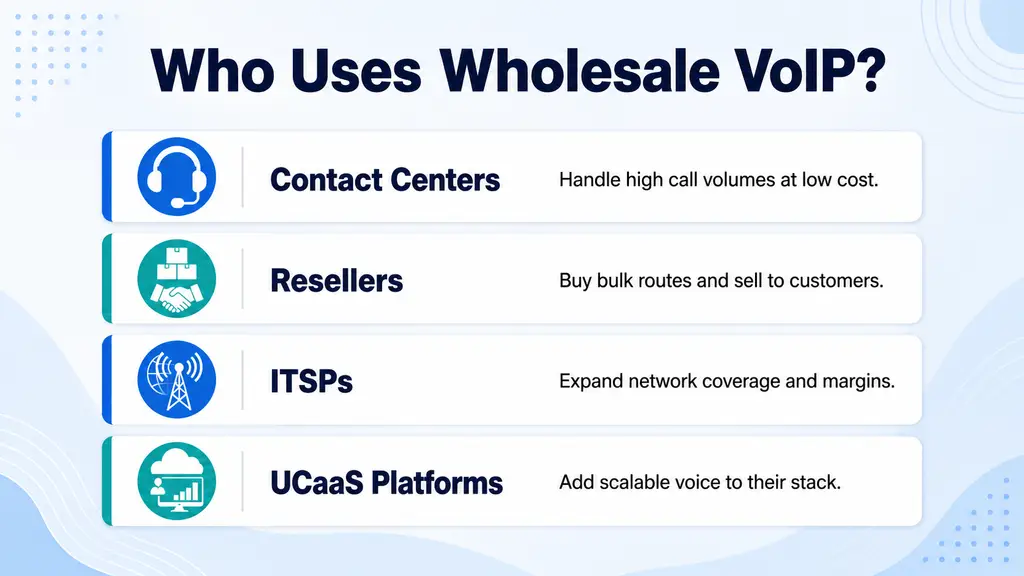
Grossistpriser för VoIP anges per minut, per destination, med fakturering i 6-sekunders eller 1-sekunds steg. Ett typiskt priskort har tusentals rader – en per landprefix eller ibland en per riktnummer inom ett land. Priserna ändras varje vecka. Vissa byter dagligen.
Prissättningen beror på tre variabler: destinationsland, typ av rutt (CLI vs icke-CLI, mer om det nedan) och din månatliga bindande volym. Samma samtal till Tyskland kan kosta 0,0085 €/min på en Tier-1 CLI-rutt eller 0,0028 €/min på en icke-CLI-grå rutt, och skillnaden är inte alltid uppenbar förrän du tittar på data om samtalsslutförande en månad senare.
Det finns två prisstrukturer som du oftast ser:
Volymförpliktelser ger dig 15–35 % bättre priser. Så gör endast uppsägning åtaganden (inga ursprungs-DIDs). Förhandlingsfrågor; publicerade prislistor är vanligtvis startpunkten, inte slutpunkten.
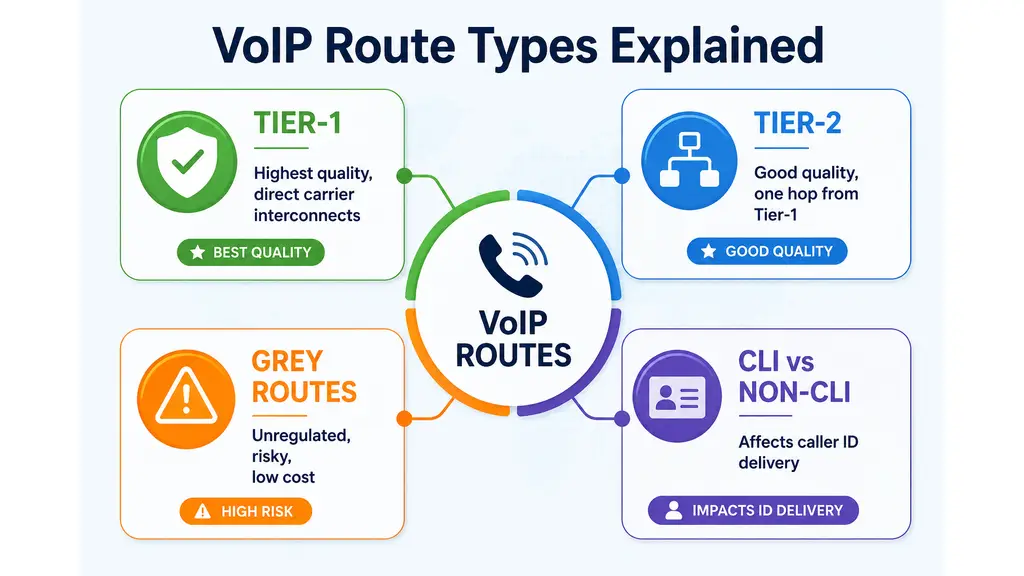
"A-Z-terminering" är branschjargong för en rutt som kan avsluta samtal till alla länder på jorden - Andorra till Zimbabwe. Premium-A-Z-rutterna är CLI-garanterade: den uppringda parten ser det ursprungliga uppringande numret på sin telefon, samtalssignaleringen bevarar nummerpresentationen från början till slut, och rutten är direkt Tier-1 utan hopp på gråmarknaden.
Icke-CLI-rutter tar bort eller ersätter nummerpresentatören. De är billigare – ibland 60 % billigare – eftersom de går ut via operatörer som inte betalar hela avvecklingsavgiften till destinationsoperatören. Avvägningen: skräppostflaggning är mer sannolikt, slutförandefrekvensen är lägre och destinationsoperatören kan svarthåla hela prefixet utan förvarning om missbruksklagomålen ökar.
De flesta välrenommerade grossistköpare använder en blandad strategi: CLI-rutter för premium affärstrafik (där den uppringda parten förväntar sig att veta vem som ringer) och icke-CLI för marknadsföringsuppringare och robocalling med stora volymer där marginalen är av största vikt. Det går bra att blanda. Att låtsas som en icke-CLI-rutt är CLI för en kund är bedrägeri – och kan upptäckas.
De två halvorna av ett VoIP-grossistavtal. Uppsägning = dina utgående samtal som lämnar din plattform och når destinationsluren. Ursprung = inkommande samtal som kommer in på ett DID (Direct Inward Dial-nummer) och anländer till din plattform.
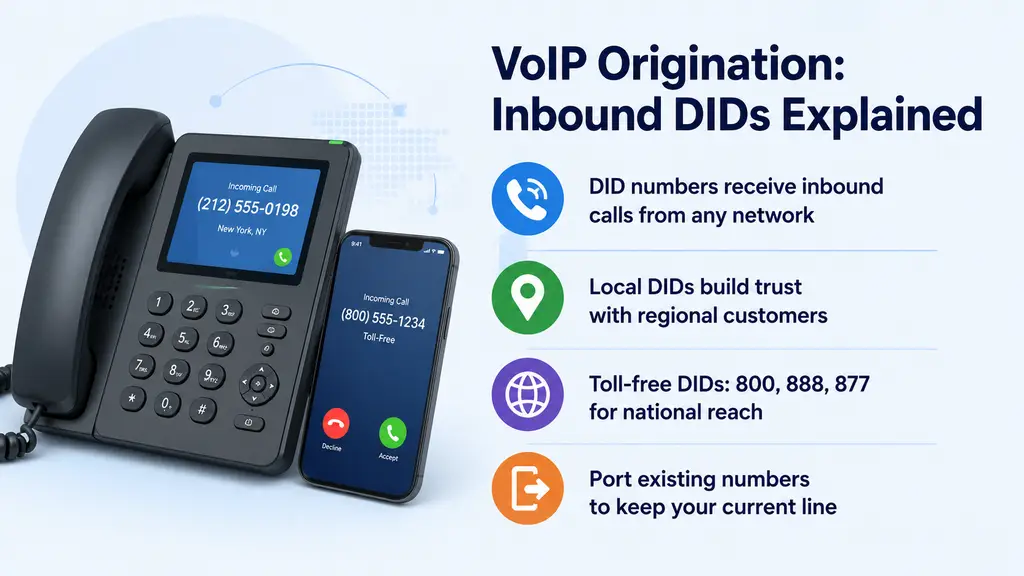
Uppsägning är prissatt per minut. Originering prissätts per DID per månad plus en minutavgift för inkommande samtal. En lokal DID i USA hyr vanligtvis för 0,50–2 USD per månad med 0,005–0,01 USD inkommande per minut. Avgiftsfria DID:er är dyrare ($1–$5/månad) men inkommande betalas av den uppringda parten - vilket är du - så matematiken är annorlunda.
De flesta grossistköpare behöver båda. Ett kontaktcenter som ringer ut behöver avslutas. Ett SaaS-företag som ger varje kund en unik supportlinje behöver ursprung. En CPaaS-leverantör behöver båda i massiv skala över 100+ länder.
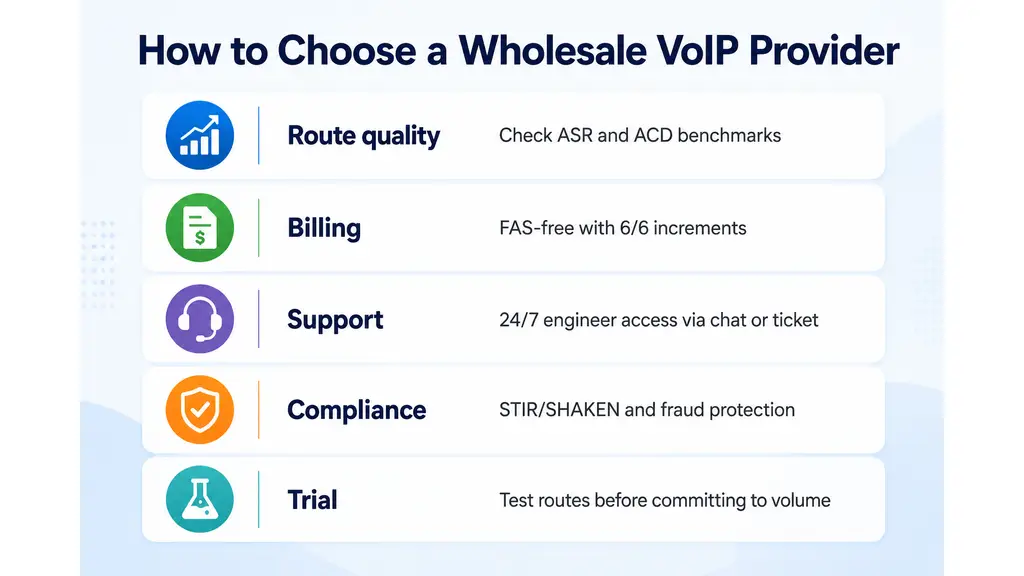
Rätt leverantör beror på vad du optimerar för. Fem frågor skär igenom marknadsföringstext snabbare än något annat.
1. Var är deras Tier-1 sammankopplingar? Be om en lista över direkta telekommunikationsavtal. Om en leverantör säger "Tier-1-rutter" men dirigerar trafik genom tre mellanliggande operatörer för att nå Vodafone, är det inte Tier-1; det är marknadsföring.
2. Vad är failover-beteendet? Om deras primära rutt till Tyskland går ner klockan 03.00, hur snabbt omdirigeras trafiken och till vilken reserv? Be om obduktion av incidenter från de senaste sex månaderna.
3. Hur fakturerar de? Inkrement på 1 sekund sparar 5–8 % jämfört med 60 sekunders fakturering på en miljonminutersmånad. De flesta ansedda grossistleverantörer fakturerar på 1 sekund efter den första minuten.
4. Vad är vägen för tvistlösning? När en kund hävdar att de har fakturerats för ett samtal de inte har ringt, vad är SLA för lösning? Ansedda operatörer har CDR (Call Detail Record) revisionsverktyg som du kan betjäna själv.
5. Vem svarar när du ringer NOC klockan 03.00? Grossiströst har inga "supporttimmar". NOC är bemannad 24/7 eller så är det inte en riktig grossistverksamhet. Testa deras svarstid innan du skriver under.
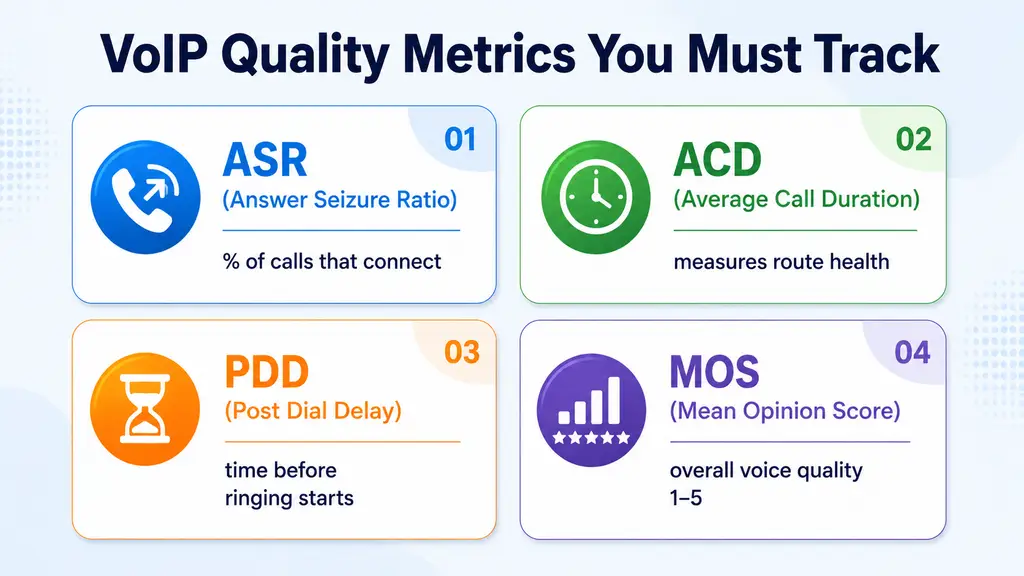
Tre siffror talar om för dig om en grossistrutt är bra eller dålig.
ASR (Answer-Seizure Ratio) är andelen samtal som besvaras av det totala antalet beslagtagna. En sund ASR för utgående affärstrafik är 45–65 %. En ASR under 30 % på en CLI-rutt betyder vanligtvis att din trafik filtreras som skräppost hos destinationsoperatören.
ACD (Average Call Duration) är hur länge besvarade samtal varar. En minskning av ACD utan en minskning av ASR är ett kontrolltecken på att destinationsnätverket kopplar samtal och sedan släpper dem. Vissa grå rutter gör detta medvetet för att göra anspråk på en fakturerbar anslutning.
PDD (Post-Dial Delay) är tiden mellan att du avslutar uppringningen och att destinationsluren börjar ringa. Under 4 sekunder är utmärkt. Över 8 sekunder och dina kunder kommer att tro att nätverket är trasigt. PDD är kanariefågeln i kolgruvan för ledningsproblem uppströms.
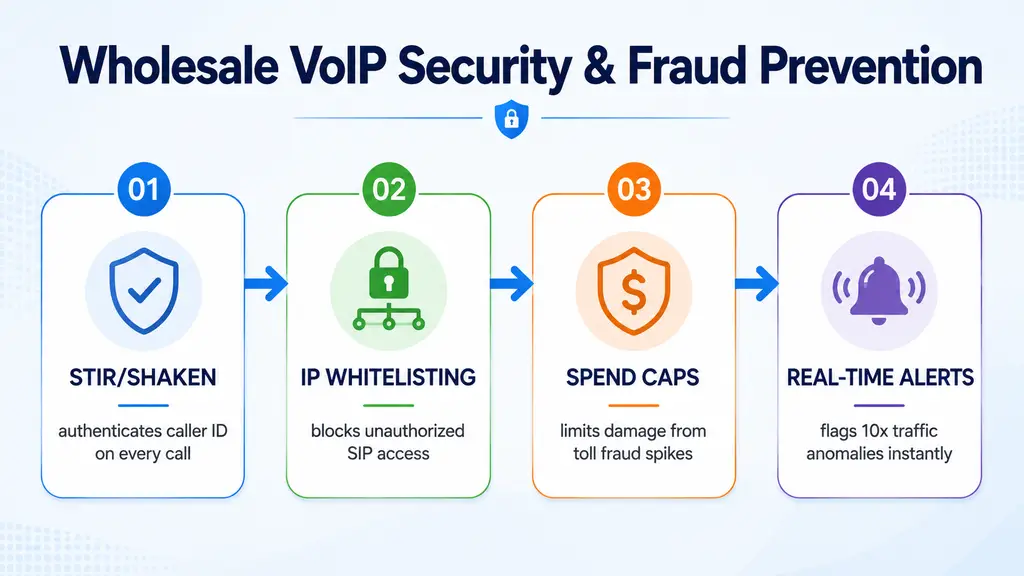
Avgiftsbedrägeri är den enskilt största finansiella risken inom VoIP i grossistledet. Mönstret är välkänt: angripare kompromissar med en växel eller en svagt säkrad SIP-trunk och ringer sedan tiotusentals dyra internationella samtal - vanligtvis till premiumnummer i oklara länder - under en långhelg. På måndag morgon är räkningen $40 000.
Tre kontroller minskar bedrägeririsken till nästan noll utan att bromsa legitim trafik:
Alla ansedda grossistleverantörer erbjuder alla tre som inbyggda kontroller, inte betalda tillägg. Om de tar betalt för bedrägeriskydd är de inte en seriös grossistleverantör.
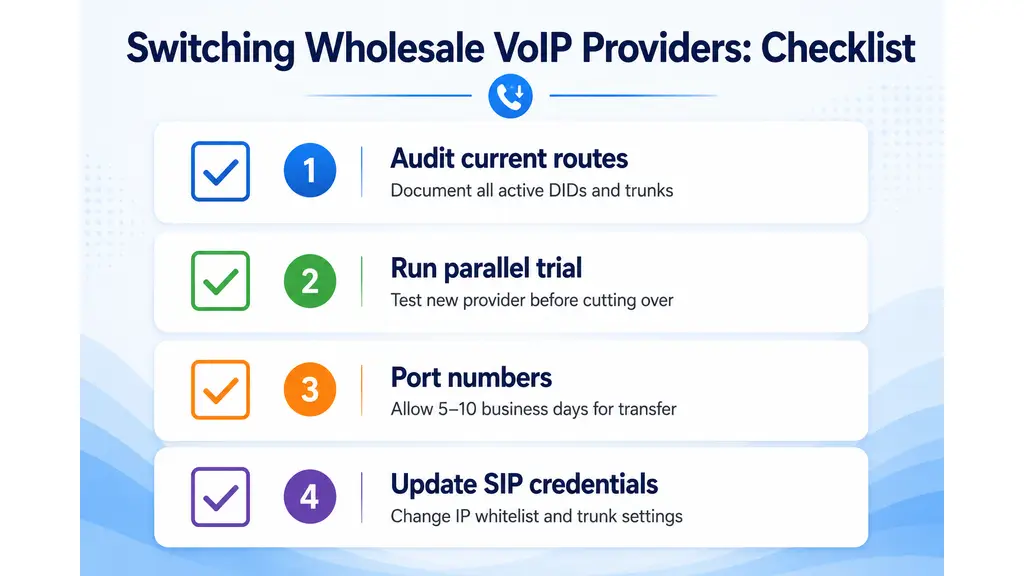
Byte är det ögonblick de flesta grossistköpare fruktar. Det behöver inte vara smärtsamt om du ordnar det ordentligt.
Rätt sekvens: tillhandahåll SIP-trunkar med den nya leverantören först, kör 5–10 % av testtrafiken i två veckor, validera ASR/ACD/PDD på de nya rutterna matchar eller slå den dominerande operatören, flytta sedan trafiken i steg om 25 % under fyra veckor. Håll det gamla avtalet aktivt tills det nya är helt bevisat. Nummerportering (LNP) för ursprungs-DID:er är en separat arbetsström – börja den första dagen, räkna med 7–10 arbetsdagar för lokalbefolkningen i USA och längre för internationella.
Skär aldrig över 100 % på dag ett, även om den nya leverantörens försäljningstekniker svär att det kommer att gå bra. Röstinfrastrukturen är full av kantfall som bara dyker upp under verklig trafik.
VoIP i grossistledet ser skrämmande ut från utsidan eftersom språket är operatörens språk – priskort, avräkning, A-Z-rutter, CLI-integritet – men de underliggande besluten skiljer sig inte så mycket från alla andra kommersiella leveransavtal. Du köper en vara som varierar i kvalitet från en leverantör till en annan, betalar ett pris per enhet som beror på volym och ruttkvalitet, och du lever eller dör av hur noggrant du mäter vad du faktiskt fick.
De köpare som gör det bra delar tre vanor. De mäter ASR, ACD, PDD och MOS kontinuerligt, inte bara vid upphandling. De håller minst två flygbolag varma för varje större destination, så en ruttförsämring blir aldrig ett avbrott. Och de behandlar bedrägerikontroller som en icke-förhandlingsbar standard, inte ett tillägg. Få de tre rätt och grossist VoIP blir en av de mest förutsägbara kostnadsposterna på budgeten.
Retail VoIP säljer rösttjänster till slutanvändare (en person, ett företag) med appar, enheter och support. VoIP i grossistledet säljer råa röstminuter mellan operatörer och företag som driver sin egen plattform – inget användargränssnitt, inget konsumentstöd, mycket lägre minutpriser och en volymförpliktelse som vanligtvis är ansluten.
På en CLI-rutt ser den uppringda parten det ursprungliga nummerpresentationen och samtalssignaleringen bevaras från början till slut. På en icke-CLI-rutt tas nummerpresentationen bort eller ersätts. Icke-CLI är billigare men färdigställandegraden är lägre och skräppostflaggning är mer sannolikt.
A-Z är industrins förkortning för en rutt som kan avsluta rösttrafik till alla länder i världen - Andorra till Zimbabwe. En "Tier-1 A-Z"-leverantör har direkta förlikningsavtal med stora teleföretag i varje destinationsregion.
Per minut, efter destinationsprefix, vanligtvis i steg om 1 sekund efter en våning på 1 minut. Vissa leverantörer fakturerar i 6-sekunders block. Ju kortare inkrement, desto mer pengar sparar du på korta samtal — vanligtvis 5–8 % på en miljonminutersmånad.
För utgående affärsrösttrafik på CLI-rutter är 45–65 % hälsosamt. Under 30 % betyder vanligtvis att trafiken filtreras bort som spam hos destinationsoperatören, eller att du är på en försämrad rutt.
Tre kontroller minskar risken för avgiftsbedrägeri till nära noll: dagliga utgiftstak per destination för högriskprefix, IP-vitlistning så att trunk endast accepterar trafik från dina egna server-IP:er och avvikelsedetektering i realtid som varnar om 10x toppar i volym till en enda destination.
Tier-1 A-Z-uppsägning, ursprungs-DID i 120+ länder, transparenta priskort, 1-sekundsfakturering och en 24/7 NOC som hämtas på under 90 sekunder.