Understanding Wholesale Voice: Key Insights and Benefits
Wholesale voice enables businesses to buy and sell voice communication in bulk, delivering cost-effective global connectivity. This guide covers how it works, termination providers, top vendors, benefits, future trends, and how to choose the right solution.
Wholesale Voice
Understanding Wholesale Voice: Key Insights and Benefits
Introduction
Wholesale voice, also known as wholesale VoIP (Voice over Internet Protocol), is a phone service that sends voice calls over the internet. It is built for businesses, service providers, and carriers. These users need to move large volumes of call traffic at a low cost.
Wholesale voice means buying and selling voice call termination in bulk. This brings lower rates and better connections. This guide explains what wholesale voice is and why it helps. It also covers termination providers and the top companies in the field.
Wholesale voice means buying and selling voice calls in bulk. Companies sell them to other businesses and service providers at lower rates.
The main benefits of wholesale voice are lower costs, smooth global calling, and room to grow your business.
Two things matter most for success: picking the right termination provider, and keeping up with the rules and compliance.
Understanding Wholesale Voice Services
Wholesale voice services are sold in large quantities to service providers. The two main types are VoIP and SIP. VoIP (Voice over Internet Protocol) sends voice calls over the internet, which is a low-cost way to make calls. Service providers buy VoIP minutes in bulk and then sell them to end users at fair prices.
What is Wholesale Voice?
Wholesale voice means selling call minutes in bulk to other businesses. This is usually done through Carrier VoIP services. It matters a lot for phone companies that want to grow their voice services. They can do this without spending big money on their own network.
Buying wholesale minutes helps firms meet what their customers need. It lets them handle changes in call volume and reach more places. Carrier VoIP plays a key role here. It moves voice data smoothly between both sides, so calls stay clear and the rates stay low.
Wholesale voice services help companies offer more to their customers. They also open up new income and make a company a strong player in the busy phone market.
Wholesale voice services enable bulk voice traffic management for carriers, resellers, and enterprises worldwide.
Wholesale Voice Terminations
Wholesale voice terminations are a key part of the phone industry. Termination means routing a call and completing it at the other end, including Toll-Free numbers. Done well, it keeps calls flowing without breaks.
Choosing the Right Termination Provider
In wholesale IP telephony, you need to pick the right termination provider. Look at the top wholesale VoIP providers and judge them on quality and reliability. Good quality means calls connect with little delay and clear sound. Reliability keeps your call network running without breaks.
Some of the top wholesale VoIP providers known for great service are Twilio, Plivo, Voxbone, and Telnyx. People trust them for their advanced networks, steady connections, and helpful support. That makes them strong choices for businesses that want the best termination services.
Role of Wholesale Voice Termination
The main job of voice termination is to route and complete calls well. It often uses Direct Inward Dialing (DID) numbers. A DID number gives a unique phone number to each user or team in a company. Callers can dial that number directly, with no receptionist or operator in the middle.
DID numbers help wholesale voice termination providers in three ways. They make call routing simpler, improve the customer experience, and make calls flow more smoothly overall.
Wholesale voice termination routes calls via DID numbers, ensuring efficient call delivery to any destination.
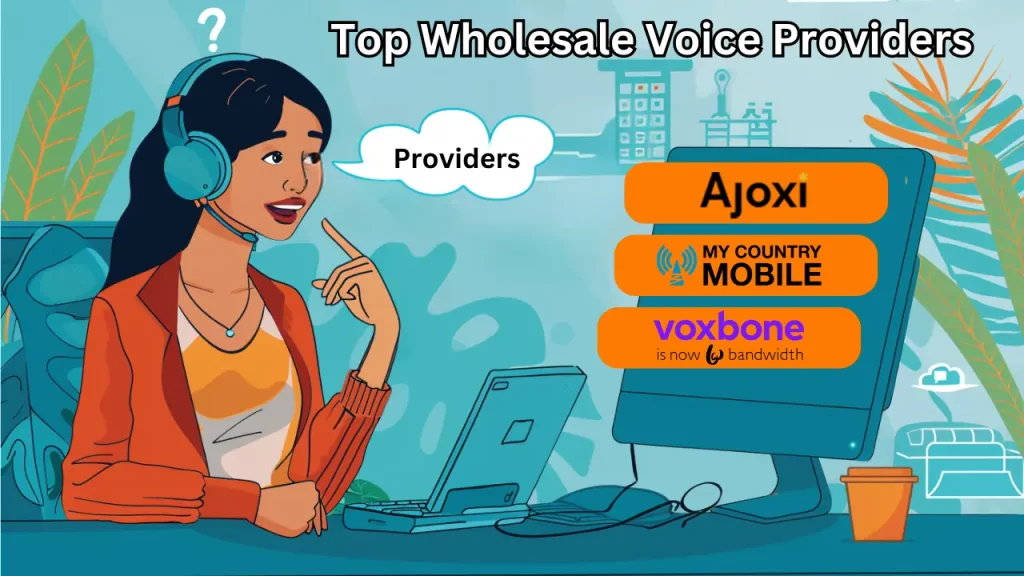
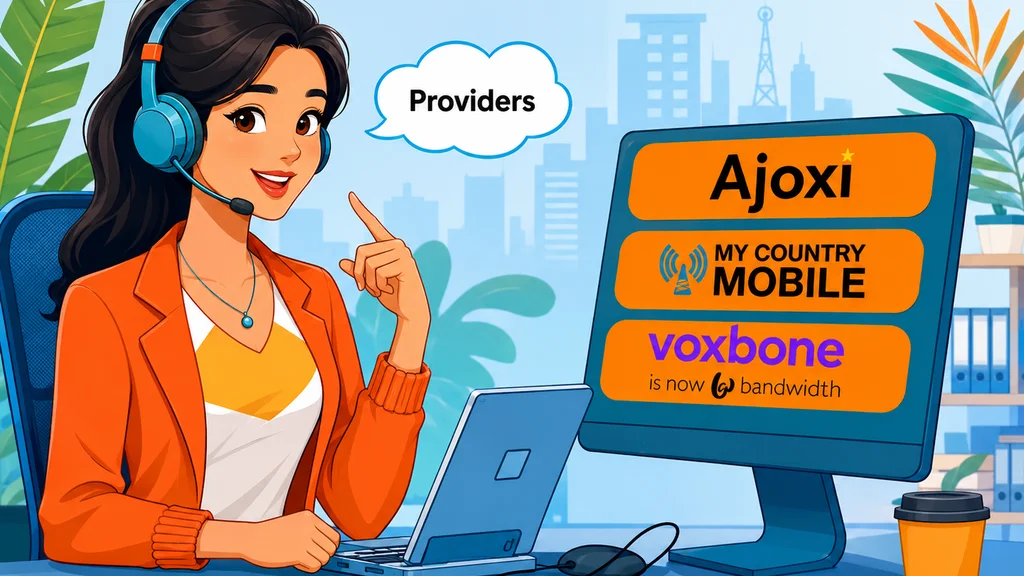
Top Wholesale Voice Providers
The well-known wholesale voice providers in the industry include Verizon, BICS, Ace Peak, BT Wholesale, Tata Communications, iBasis, and IDT Corporation. Each one offers a wide mix of services. Together they meet many different global calling needs.
Exploring Leading Providers
Top providers like My Country Mobile and SoftTop each bring something different to wholesale long-distance calling. My Country Mobile stands out with solutions you can shape and scale to fit your needs. This keeps costs low and gives businesses room to adapt.
1. Ajoxi
Ajoxi is known for reliable, low-cost wholesale voice solutions. Services include VoIP termination, SIP trunking, DID numbers, and international calling. Our platform offers high-quality routes, a dependable service platform, and fair pricing. That makes it a strong choice for businesses of any size that want to grow their calling.
2. My Country Mobile (MCM)
My Country Mobile is known for reliability and a strong network. It offers a full range of wholesale VoIP services, including SIP trunking, DID numbers, and SMS. MCM gives great support and fair pricing. This makes it a popular pick for businesses that want to grow their calling.
3. Bandwidth
Bandwidth is a well-known provider with a large network and reliable service. It offers voice, messaging, and emergency services across many industries. Its strong API platform makes it easy to plug in. It also follows the rules closely, which keeps calls safe and reliable.
4. Voxbone (Now part of Bandwidth)
Voxbone focuses on global voice and messaging services. It offers phone numbers in over 60 countries and high-quality SIP trunking. The platform is known for being reliable, easy to scale, and simple to plug in. That makes it a top pick for enterprises and service providers.
5. Twilio
Twilio is a leading cloud communications platform. It offers a wide range of services, including voice, messaging, and video. Its API lets businesses add communication features right into their own apps. Twilio is known for its global reach, high-quality service, and strong support for developers.
6. VoIP Innovations
VoIP Innovations offers a strong wholesale VoIP platform with services like SIP trunking, DIDs, and messaging. It has an easy-to-use portal, fair wholesale voice rates, and reliable service. Its large network and focus on new ideas make it a strong player in the wholesale VoIP market.
Top wholesale voice providers compared — Ajoxi, Twilio, Bandwidth, and more.
You may also know: Wholesale voice termination in 2026 — 3 setup choices that scale your platform 100x.
Benefits of Wholesale Voice Services
Wholesale voice services bring many benefits. They lower costs, make global calling smoother, and help a business grow. Explore our voice services portfolio.
Cost-Effectiveness of Wholesale Voice
Wholesale voice saves money by buying calls in bulk at lower rates. Providers then resell them to end customers or other businesses. Wholesale termination services cut costs even more. Providers hand off large volumes of call traffic at reduced rates.
Wholesale termination is a key part of running lean and earning more. It lets wholesale voice providers handle huge call volumes. They do this without paying high costs for their own network and upkeep.
Global Communication Efficiency
Unified Communications help businesses talk more smoothly. They bring together voice, video, and messaging in one place. New 5G networks make wholesale voice services even better. They offer faster data speeds and less delay, which improves real-time calls.
Enhancing Business Growth
Wholesale voice services help companies grow and reach more customers. For example, phone companies can use wholesale services to offer international calling packages. This draws in more customers and raises their income. Offering more services keeps customers happy and builds the brand's good name.
Wholesale voice delivers cost savings, global reach, and scalability for businesses of all sizes.
Future Trends in Wholesale Voice Services
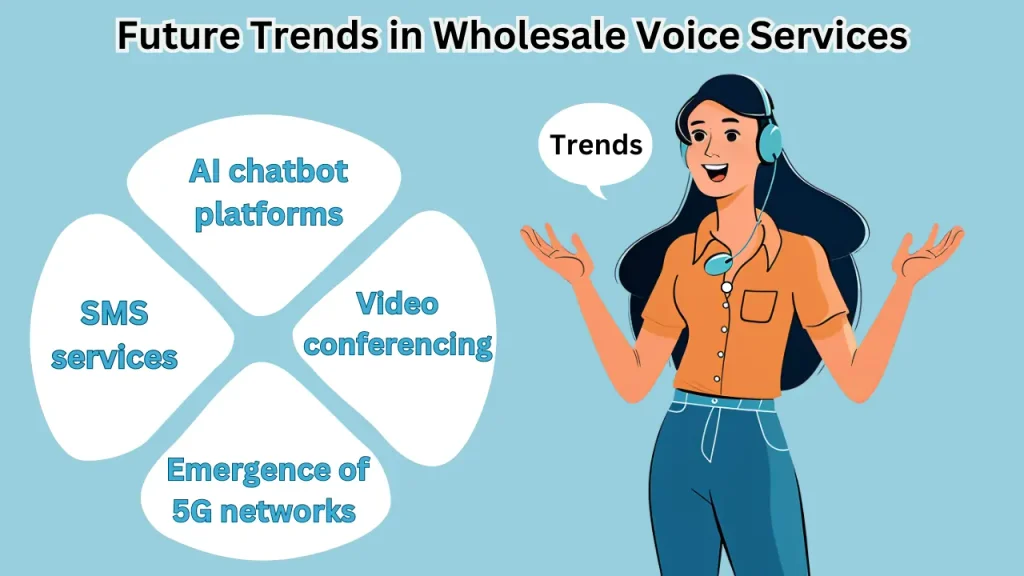
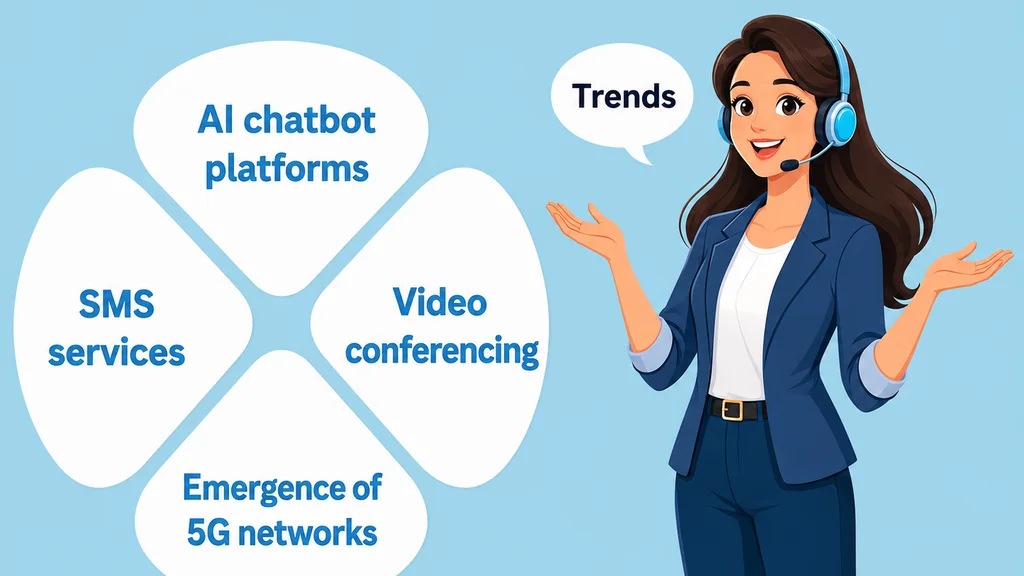
The future of wholesale voice services is shaped by a few big changes. These include better video conferencing, AI chatbot platforms, and new 5G networks. Together they are set to change how voice services are delivered.
Innovations and Impact on the Industry
New tools are making a big mark on the wholesale voice industry. These include Voice API, SMS services, and Unified Communications. They raise the level of service and make customers happier. Voice API lets businesses add voice calling right into their apps, so they can communicate more easily.
Regulations and Compliance
The rules and compliance for wholesale voice services are watched over by bodies like the Federal Communications Commission (FCC). A few standards keep this field safe and reliable. These include STIR/SHAKEN and the Authenticating Consortium for Resale of Authentication Services (ACRA). The FCC makes sure service providers follow the rules.
Trend / Innovation
Description
Voice Traffic Analysis
Advanced analytics tools that provide insights into voice traffic patterns, allowing for better resource allocation and network optimization.
AI Integration
AI-powered solutions that enable automated call routing, voice recognition, and real-time voice quality monitoring.
Blockchain Technology
Transparent and secure voice traffic management using blockchain, ensuring data integrity and reducing fraud.
5G Integration
Integration of wholesale voice with 5G technology, providing faster data speeds and lower latency for seamless voice communication.
Future trends reshaping wholesale voice — AI chatbot platforms, 5G networks, video conferencing, and SMS services.
Industry Impact of Wholesale Voice
Wholesale voice has a big effect on the industry. It shapes retail voice services, improves voice quality, and makes international calls connect smoothly. Report telecom fraud to the FTC.
Consumer Experience
Two things make the customer experience better in wholesale voice services. The first is great voice quality. The second is Unified Communications. Better voice quality means customers get clear audio and calls that do not drop.
International Calls
International calls are a key part of wholesale voice. Wholesale Long Distance and Carrier VoIP services are the base for smooth global calling. These services link businesses, call centers, and people across borders. They offer a low-cost and reliable way to stay in touch.
Voice Quality
Voice quality in wholesale voice is kept high with codecs such as G.711, G.723, and G.729. These help keep calls clear and reliable. A codec shrinks and rebuilds the audio signal. This makes sure customers hear great sound during their calls.
Improving VoIP Routes Quality
To improve VoIP route quality, providers use efficient codecs like G.711, G.723, and G.729. A codec shrinks and rebuilds the audio data. This keeps the voice signal clear as it travels over the internet. Quality of Service (QoS) protocols also help. They give VoIP traffic priority so calls flow more smoothly.
Choosing the Best Provider
To pick the best wholesale voice provider, look at the top wholesale VoIP providers and how good their service is. Compare the offerings and quality of well-known providers like Telnyx, Twilio, Voxbone, and Plivo. This helps you make a smart choice. Key things to check are global coverage, a reliable network, fair pricing, and great support.
You can also look at their track record, customer reviews, and technical skills. These show you how good their service really is.
Challenges Facing VoIP Providers
VoIP providers face a number of challenges. The two biggest are following the rules and keeping the network safe. On the rules side, providers must work through many laws that change from country to country.
Technology keeps changing fast, which makes network safety a constant challenge. Cyber threats keep getting smarter. To guard against hacking, phishing, and other cybercrime that could harm their service and customer data, VoIP providers must use strong security measures.
Cost Savings in Communication Expenses
You can save money on calls by buying wholesale minutes in bulk at lower rates. This simple step cuts a business's calling costs by a lot. Buying minutes in bulk lets companies spend less on phone calls and messaging. In the end, this means more profit and smoother operations.
Wholesale voice shapes the industry — from voice quality codecs to seamless international connectivity.
You may also know: Wholesale voice services — the infrastructure layer powering global calls.
Conclusion
Wholesale voice services play a key role in today's phone industry. They give businesses a low-cost and efficient way to communicate around the world. Wholesale voice cuts costs, widens global reach, and lets companies scale up. With these benefits, companies can greatly improve how they communicate.
Picking the right 516 area code provider matters a great deal. It shapes your service quality, reliability, and how well you follow the rules. Ajoxi's wholesale voice solutions offer reliable, high-quality routes with fair pricing and 24/7 support. You get set up in hours, not weeks.
FAQ's
What is wholesale voice?
Wholesale voice is the practice of selling voice communication services in bulk to other telecommunications companies and service providers at discounted rates.
How does wholesale voice work?
Wholesale voice providers buy large blocks of voice minutes from carriers and resell them to businesses, call centers, and other service providers. Calls are routed over IP networks using VoIP/SIP protocols, with the wholesale provider managing the interconnects, routing tables, and quality of service.
Who uses wholesale voice?
Wholesale voice is used by telecom carriers, VoIP resellers, call centers, UCaaS platforms, enterprises with high call volumes, and any business needing to provision large numbers of phone lines cost-effectively.
What are the benefits of using wholesale voice?
Key benefits include significantly lower per-minute rates, access to global PSTN connectivity without building infrastructure, scalability on demand, and the ability to offer voice services to end customers under your own brand.
Are there any risks associated with wholesale voice?
Key risks include toll fraud (unauthorized calls on your account), route quality degradation (poor ASR/MOS from grey routes), regulatory non-compliance across countries, and vendor lock-in. Mitigate these by using providers with fraud-detection systems, SLA-backed route quality guarantees, STIR/SHAKEN compliance, and flexible contract terms.
Is wholesale voice the same as retail voice?
No. Wholesale voice operates B2B — selling to businesses and carriers in bulk at lower rates. Retail voice sells directly to end consumers at higher per-minute or subscription prices. Many providers operate both layers.
Run your voice on Ajoxi.
AI receptionists, wholesale routes, virtual numbers — built on one platform with transparent pricing and a 24/7 NOC.