Cách thức hoạt động của một doanh nghiệp cung cấp dịch vụ thoại bán buôn vào năm 2026: Hoạt động, KPI & Lộ trình gia nhập
Bên trong một doanh nghiệp cung cấp dịch vụ thoại bán buôn vào năm 2026 — năm trụ cột hoạt động, sáu bộ phận cốt lõi, vốn ban đầu từ 300 nghìn đô la đến 1 triệu đô la, các KPI thực sự xác định sức khỏe và giải pháp thay thế nhãn trắng giúp giảm chi phí đầu vào xuống dưới 50 nghìn đô la.
Bán buôn giọng nói
Cách thức hoạt động của một doanh nghiệp cung cấp dịch vụ thoại bán buôn vào năm 2026: Hoạt động, KPI & Lộ trình gia nhập
Giới thiệu
Đó là buổi sáng thứ Hai của một đứa trẻ 12 tuổi kinh doanh cung cấp dịch vụ thoại bán buôn. Kỹ sư NOC ca đêm đang ký hợp đồng sau khi định tuyến lại hai hành lang đã xuống cấp ở châu Á chỉ sau một đêm. Bộ phận quản lý tuyến đường đang xử lý 47 thông báo thay đổi tỷ giá từ các nhà cung cấp dịch vụ thượng nguồn đến từ nửa đêm đến 6 giờ sáng. Trưởng nhóm tuân thủ đang chuẩn bị phản hồi truy nguyên STIR/SHAKEN cho FCC, hạn chót vào thứ Sáu.
Giám đốc tài chính sẽ có cuộc gọi lúc 7 giờ sáng về phòng ngừa rủi ro ngoại hối cho các khoản thanh toán ở Mỹ Latinh trong quý tới. Không ai trong số này trông giống như "thoại qua IP" từ bên ngoài.
Hoạt động kinh doanh nhà cung cấp dịch vụ thoại bán buôn là một cỗ máy vận hành phức tạp tồn tại đằng sau mọi gói VoIP bán lẻ, mọi API CPaaS và mọi kênh thoại của trung tâm liên lạc vào năm 2026.
Hướng dẫn này trình bày chi tiết những gì chiếc máy đó thực sự làm - năm trụ cột hoạt động, công việc hàng ngày, sáu bộ phận cốt lõi, KPI xác định thành công và những gì cần thiết để tham gia hoặc mở rộng quy mô kinh doanh nhà cung cấp dịch vụ thoại bán buôn trong năm nay ở Hoa Kỳ và trên toàn cầu.
Kinh doanh cung cấp dịch vụ thoại bán buôn là gì?
Một doanh nghiệp cung cấp dịch vụ thoại bán buôn mua dung lượng thoại từ các mạng cấp 1 ngược dòng và bán lại số lượng lớn số phút định tuyến, DID và dịch vụ chấm dứt cho các doanh nghiệp khác — đại lý, BPO, MVNO, nền tảng CPaaS và doanh nghiệp. Doanh nghiệp vận hành SBC, chuyển mạch phần mềm, công cụ định tuyến, nền tảng thanh toán và cơ sở hạ tầng tuân thủ. Doanh thu đến từ lợi nhuận mỗi phút, tiền thuê DID, dịch vụ định tuyến giá trị gia tăng và phí chương trình đối tác.
Hầu hết các nhà cung cấp dịch vụ thoại bán buôn của Hoa Kỳ đều đăng ký với FCC theo phân loại nhà cung cấp dịch vụ thông thường và Cơ sở dữ liệu giảm thiểu cuộc gọi tự động. Toàn bộ các dịch vụ mà mô hình kinh doanh này cung cấp được bao gồm trong chương trình bán buôn. dịch vụ thoại Tổng quan.
Năm trụ cột hoạt động của nhà cung cấp dịch vụ thoại bán buôn
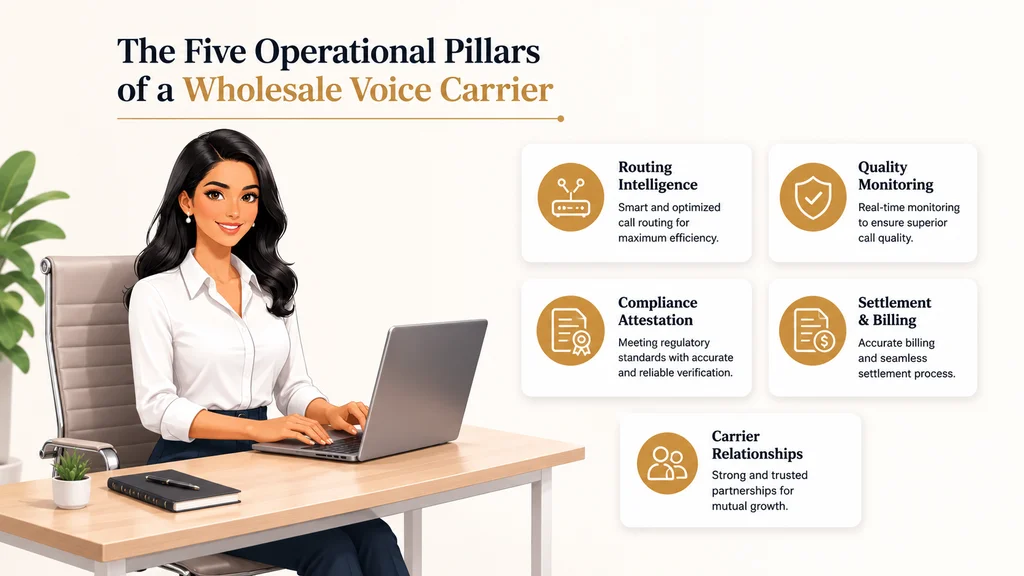
Mọi nhà cung cấp dịch vụ thoại bán buôn đang hoạt động đều dựa trên năm trụ cột giống nhau bất kể quy mô hoặc chuyên môn:
Định tuyến thông minh — công cụ chấm điểm mọi đường đi sẵn có cho mỗi cuộc gọi trong thời gian thực
Giám sát chất lượng - đo liên tục ASR, ACD, PDD và FAS trên mọi tuyến đường hoạt động
Chứng nhận tuân thủ — Ký STIR/SHAKEN, đăng ký Cơ sở dữ liệu giảm thiểu cuộc gọi tự động của FCC, phản hồi truy nguyên, nơi lưu trữ dữ liệu GDPR, quy tắc quay số nhận biết TCPA
Thanh toán và thanh toán - Thu thập CDR, đối chiếu hóa đơn ngược dòng, thanh toán xuôi dòng cho khách hàng
Mối quan hệ vận chuyển — hợp đồng song phương với các mạng cấp 1 (AT&T, Verizon Business, Lumen, T-Mobile ở Hoa Kỳ), cơ quan quản lý và nhà khai thác điểm đến
Các nhà cung cấp dịch vụ đầu tư dưới mức vào bất kỳ công ty nào trong số năm công ty cuối cùng cũng cảm nhận được điều đó. Hầu hết các thất bại trong hoạt động kinh doanh này đều bắt nguồn từ việc tuân thủ nguồn lực hạn chế hoặc mối quan hệ với nhà cung cấp dịch vụ kém phát triển. Dành cho người mua đánh giá VoIP bán buôn nhà cung cấp chấm dứt, việc hiểu rõ những trụ cột này giúp xác định nhà cung cấp dịch vụ nào đã xây dựng cơ sở hạ tầng thực sự so với những nhà cung cấp dịch vụ tổng hợp các tuyến đường màu xám.
Năm trụ cột hoạt động mà mọi nhà cung cấp dịch vụ thoại bán buôn đều dựa vào — thông tin định tuyến, giám sát chất lượng, chứng thực tuân thủ, thanh toán & thanh toán cũng như mối quan hệ với nhà cung cấp dịch vụ.
Hoạt động hàng ngày: Điều gì thực sự xảy ra
Nhà cung cấp dịch vụ thoại bán buôn đang hoạt động theo chu kỳ 24/7. NOC giám sát chất lượng tuyến đường theo thời gian thực và đưa ra cảnh báo khi ASR giảm xuống dưới ngưỡng trên bất kỳ hành lang hoạt động nào. Bộ phận quản lý tuyến đường liên tục xử lý các thông báo thay đổi tỷ giá ngược dòng — các điểm đến chính di chuyển hàng tuần trên các hành lang không ổn định, hàng tháng trên các hành lang ổn định.
Các nhóm tuân thủ xử lý quá trình xác minh chuỗi chứng thực, phản hồi các yêu cầu truy nguyên FCC trong các khoảng thời gian bắt buộc và duy trì các mục nhập Cơ sở dữ liệu giảm thiểu cuộc gọi tự động. Các nhóm giải quyết đối chiếu hàng tỷ bản ghi CDR với các hóa đơn ngược dòng và xuôi dòng. Các nhóm kỹ thuật duy trì SBC, triển khai các bản cập nhật thuật toán định tuyến và ứng phó với các sự cố.
Vào thời điểm một cuộc gọi thoại kinh doanh duy nhất được kết nối, khoảng ba đến bảy nhóm trong số này đã đạt được lộ trình hoặc hóa đơn trong quý vừa qua. Không ai trong số đó hiển thị cho người dùng cuối - đó là toàn bộ vấn đề.
Sáu bộ phận cốt lõi của một nhà cung cấp dịch vụ thoại bán buôn
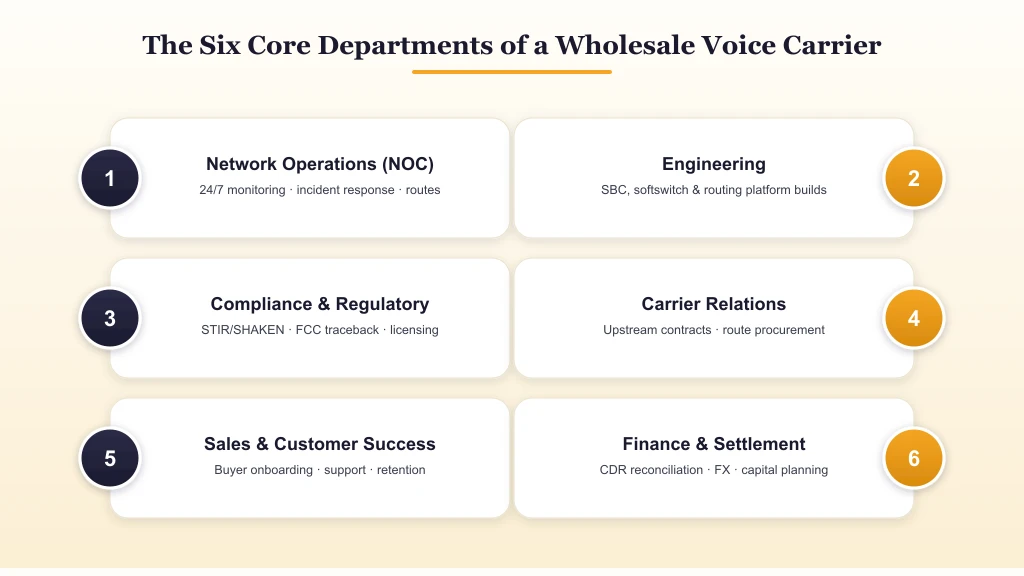
Một nhà cung cấp dịch vụ thoại bán buôn cỡ trung điển hình tổ chức khoảng sáu bộ phận cốt lõi:
Hoạt động mạng (NOC) — Giám sát 24/7, ứng phó sự cố, quản lý lộ trình
Kỹ thuật - Phát triển nền tảng SBC, softswitch và định tuyến
Tuân thủ và quy định — Chứng thực STIR/SHAKEN, truy nguyên FCC, cấp phép theo khu vực pháp lý cụ thể
Quan hệ vận chuyển — hợp đồng thượng nguồn, quản lý bảng giá, mua sắm tuyến đường
Bán hàng và thành công của khách hàng — giới thiệu, hỗ trợ, giữ chân người mua
Tài chính và thanh toán — Đối chiếu CDR, quản lý ngoại hối, lập kế hoạch vốn
Các tàu sân bay nhỏ hơn củng cố vai trò, các tàu sân bay lớn hơn sinh ra các đội phụ. Bản thân công việc vẫn giống nhau ở mọi quy mô. Hầu hết các nhà cung cấp dịch vụ thoại bán buôn vào năm 2026 đều có từ 30 đến 300 nhân viên toàn thời gian.
Sáu bộ phận cốt lõi mà một nhà cung cấp dịch vụ thoại bán buôn tổ chức xung quanh - NOC, kỹ thuật, tuân thủ và quy định, quan hệ với nhà cung cấp dịch vụ, bán hàng và thành công của khách hàng cũng như tài chính và thanh toán.
KPI xác định sự thành công của hoạt động kinh doanh nhà cung cấp dịch vụ
Năm con số cho bạn biết liệu nhà cung cấp dịch vụ thoại bán buôn có hoạt động tốt hay không. Báo cáo gian lận của nhà cung cấp dịch vụ cho FTC:
KPI
Nó đo lường những gì
Phạm vi khỏe mạnh
ASR hiệu quả cho mỗi điểm đến
Điểm chuẩn chất lượng về lưu lượng truy cập được kết nối thực
60%+ cho các tuyến bay cao cấp
Ký quỹ mỗi phút
Chênh lệch giữa chi phí thượng nguồn và tỷ lệ hạ nguồn
Mils (một phần mười xu)
Tỷ lệ rời bỏ khách hàng
Sự tiêu hao người mua hàng năm
Dưới 6-8%/năm
Độ chính xác đối chiếu CDR
Hóa đơn so với CDR
Trong vòng 1-2%
Định hướng đa dạng hóa danh mục đầu tư
Đối tác thượng nguồn trên mỗi điểm đến hàng đầu
Hơn 3 đối tác trên mỗi hành lang
Cần những gì để tham gia kinh doanh nhà cung cấp dịch vụ thoại bán buôn vào năm 2026
Việc gia nhập khó hơn so với một thập kỷ trước và dễ dàng hơn theo một số cách cụ thể. Yêu cầu về vốn đã giảm do SBC và phần mềm định tuyến chạy trên cơ sở hạ tầng đám mây thay vì phần cứng chuyên dụng. Các yêu cầu pháp lý đã tăng lên vì đăng ký Cơ sở dữ liệu giảm nhẹ cuộc gọi tự động STIR/SHAKEN, 10DLC, FCC và các khuôn khổ quốc tế tương đương hiện yêu cầu cơ sở hạ tầng tuân thủ thực sự ngay từ ngày đầu.
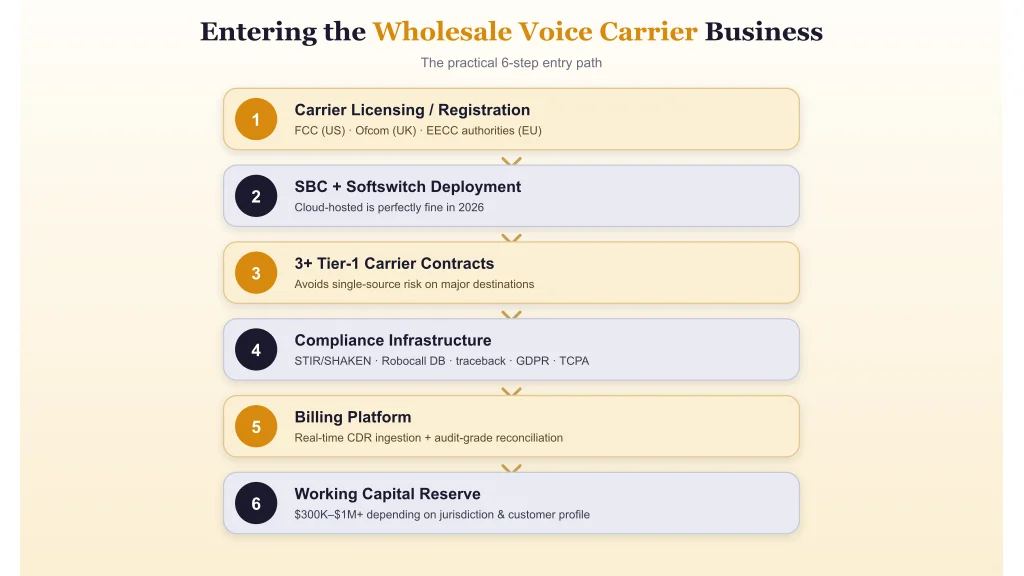
Một đường dẫn vào thực tế trông như sau:
Cấp phép hoặc đăng ký nhà cung cấp dịch vụ trong khu vực pháp lý hoạt động của bạn (FCC ở Hoa Kỳ, Ofcom ở Anh, cơ quan có thẩm quyền EECC ở EU)
Triển khai SBC chính và softswitch (lưu trữ trên đám mây vẫn ổn vào năm 2026)
Ít nhất ba hợp đồng vận chuyển cấp 1 ngược dòng để tránh rủi ro từ một nguồn duy nhất ở mọi điểm đến chính
Cơ sở hạ tầng tuân thủ — Chuỗi chứng thực STIR/SHAKEN, đăng ký Cơ sở dữ liệu giảm thiểu cuộc gọi tự động, phản hồi truy nguyên FCC, GDPR, quy tắc quay số nhận biết TCPA
Nền tảng thanh toán với việc nhập CDR theo thời gian thực và đối chiếu cấp độ kiểm tra
$300K-$1M+ trong vốn lưu động ban đầu tùy thuộc vào thẩm quyền và hồ sơ khách hàng mục tiêu
Thay thế hiện đại: mô hình chương trình đối tác hoặc nhãn trắng cho phép người bán lại vận hành một hoạt động kinh doanh giống như nhà cung cấp dịch vụ trên cơ sở hạ tầng của nhà cung cấp dịch vụ thoại bán buôn hiện có mà không phải gánh chịu toàn bộ vốn và giấy phép. Yêu cầu về vốn giảm xuống dưới $50K so với $300K-$1M+ cho một bản dựng hoàn chỉnh.
Mô hình chương trình đại lý VoIP hỗ trợ phương pháp này với quá trình tích hợp hộp cát 24-48 giờ — một điểm khởi đầu khả thi cho các nhà khai thác muốn có khả năng giống như nhà cung cấp dịch vụ mà không cần xây dựng cơ sở hạ tầng đầy đủ.
Lộ trình 6 bước thực tế để tham gia vào hoạt động kinh doanh nhà cung cấp dịch vụ thoại bán buôn — cấp phép, SBC/softswitch, hợp đồng cấp 1, tuân thủ, nền tảng thanh toán và vốn lưu động.
Tuân thủ cụ thể của Hoa Kỳ đối với các nhà cung cấp dịch vụ thoại bán buôn
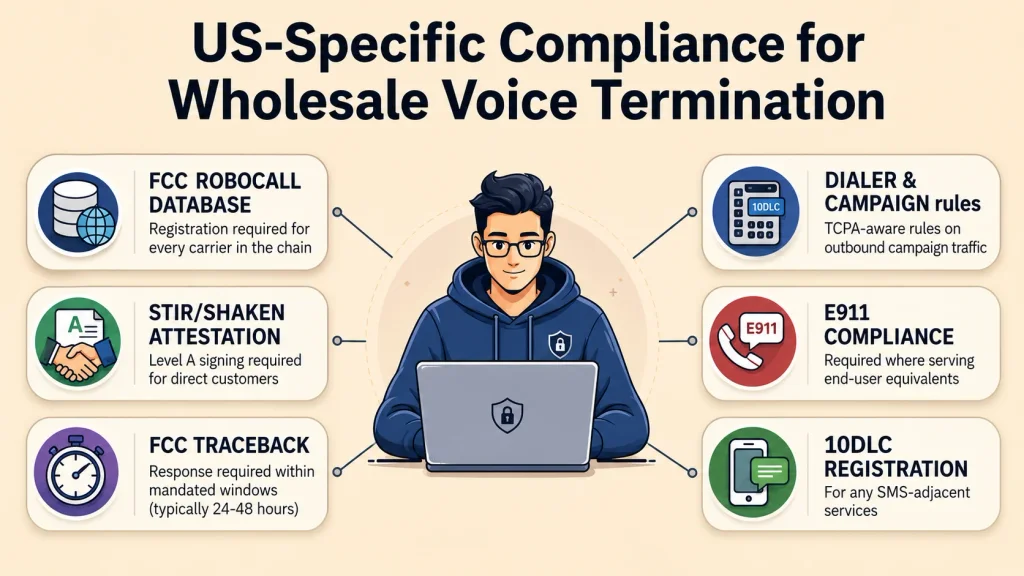
Việc điều hành một doanh nghiệp cung cấp dịch vụ thoại bán buôn với lưu lượng truy cập đến Hoa Kỳ vào năm 2026 yêu cầu cơ sở hạ tầng tuân thủ không thể thương lượng:
Cơ sở dữ liệu giảm nhẹ cuộc gọi tự động của FCC đăng ký - bị loại nếu thiếu
Chứng thực STIR/SHAKEN với chữ ký cấp A dành cho khách hàng trực tiếp
Phản hồi truy nguyên của FCC trong khoảng thời gian bắt buộc (thường là 24-48 giờ)
Quy tắc quay số nhận biết TCPA về lưu lượng truy cập chiến dịch đi
Tuân thủ E911 nơi phục vụ tương đương cho người dùng cuối
Đăng ký 10DLC cho mọi dịch vụ liền kề SMS
Định luật Kari/Đạo luật RAY BAUM cho mọi hệ thống điện thoại nhiều đường dây
Danh sách kiểm tra tuân thủ không thể thương lượng của Hoa Kỳ dành cho các nhà cung cấp dịch vụ thoại bán buôn vào năm 2026 — Cơ sở dữ liệu giảm nhẹ cuộc gọi tự động của FCC, STIR/SHAKEN Cấp A, phản hồi truy nguyên, TCPA, E911, 10DLC và Luật Kari / Đạo luật RAY BAUM'S.
Tương lai của hoạt động kinh doanh dịch vụ cung cấp dịch vụ thoại bán buôn
Định tuyến do AI điều khiển, thanh toán theo mức sử dụng và các nhóm kênh chéo đang định hình lại cách các nhà cung cấp dịch vụ thoại bán buôn mới cạnh tranh với các nhà cung cấp dịch vụ truyền hình cấp 1 hiện tại. Các nhà cung cấp dịch vụ phát triển nhanh nhất vào năm 2026 là những nhà cung cấp trí thông minh AI trên giọng nói cấp nhà cung cấp dịch vụ thay vì chỉ cạnh tranh trên bảng giá.
Ba lực lượng xác định trong 24 tháng tới: nhu cầu khối lượng công việc AI tăng đột biến, thắt chặt thực thi STIR/SHAKEN của Hoa Kỳ và tiếp tục hợp nhất nguồn cung cấp 1 khiến các mối quan hệ kết nối trực tiếp trở nên có giá trị hơn so với trước đây trong một thập kỷ.
Phần kết luận
Điều hành một doanh nghiệp cung cấp dịch vụ thoại bán buôn vào năm 2026 là một nguyên tắc hoạt động hơn là một dự án công nghệ. Năm trụ cột — thông tin định tuyến, giám sát chất lượng, chứng thực tuân thủ, thanh toán và thanh toán cũng như mối quan hệ với nhà cung cấp dịch vụ — xác định xem quy mô kinh doanh hay bị đình trệ. Sáu phòng ban phối hợp xung quanh họ.
KPI quan trọng không phải là doanh thu và thời gian hoạt động; chúng là ASR hiệu quả trên mỗi điểm đến, lợi nhuận mỗi phút, tỷ lệ rời bỏ khách hàng, độ chính xác đối chiếu CDR và đa dạng hóa tuyến đường. Quan điểm từ phía người mua về những quyết định này - cách đánh giá tỷ lệ chấm dứt và so sánh các nhà cung cấp VoIP bán buôn - được đề cập trong các hướng dẫn đồng hành.
Đối với những người mới tham gia, con đường chia đôi. Một bản dựng hoàn chỉnh vẫn có giá từ 300.000 đến 1 triệu USD+ và yêu cầu phải đăng ký FCC, hợp đồng cấp 1 ngược dòng trở lên và sáu tháng vốn lưu động trước khi hoạt động kinh doanh ổn định. Một quan hệ đối tác nhãn trắng cắt giảm con số đó xuống dưới 50 nghìn đô la và thời gian giới thiệu là 24-48 giờ.
Chọn dựa trên việc bạn muốn chịu trách nhiệm thương mại đối với mạng hay chịu trách nhiệm thương mại đối với mối quan hệ khách hàng - cả hai đều là hoạt động kinh doanh hợp lệ; họ chỉ là những doanh nghiệp khác nhau. Hướng dẫn thiết lập chấm dứt giọng nói nêu chi tiết ba lựa chọn cấu hình nhằm xác định xem nền tảng bạn xây dựng ngày nay có tồn tại ở mức âm lượng gấp 100 lần hay không.
Câu hỏi thường gặp
Một doanh nghiệp cung cấp dịch vụ thoại bán buôn hoạt động hàng ngày như thế nào?
Nhà cung cấp dịch vụ thoại bán buôn hoạt động 24/7 trên năm trụ cột hoạt động: thông tin định tuyến, giám sát chất lượng, chứng thực tuân thủ, thanh toán và thanh toán cũng như mối quan hệ với nhà cung cấp dịch vụ. Các kỹ sư của NOC liên tục giám sát chất lượng tuyến đường, các nhà quản lý tuyến đường xử lý các thông báo thay đổi tỷ lệ ngược dòng, các nhóm tuân thủ xử lý chuỗi chứng thực và phản hồi truy ngược nguồn gốc của FCC, đồng thời các nhóm giải quyết đối chiếu CDR với hóa đơn. Hầu hết các nhà mạng cỡ trung đều có 30-300 nhân viên làm việc ở sáu bộ phận cốt lõi phụ trách mọi cuộc gọi.
Tôi cần những giấy phép gì để bắt đầu kinh doanh nhà cung cấp dịch vụ thoại bán buôn?
Việc cấp phép nhà cung cấp dịch vụ thoại bán buôn phụ thuộc vào thẩm quyền. Tại Hoa Kỳ, các nhà cung cấp dịch vụ đăng ký với FCC theo phân loại nhà cung cấp dịch vụ thông thường và Cơ sở dữ liệu giảm thiểu cuộc gọi tự động. Vương quốc Anh yêu cầu đăng ký Ofcom. EU áp đặt nhiều ủy quyền quốc gia khác nhau theo Bộ luật Truyền thông Điện tử Châu Âu. Tài liệu KYC, tiết lộ mô hình lưu lượng truy cập và đăng ký công ty là những yêu cầu phổ biến. Các khuôn khổ tuân thủ như STIR/SHAKEN và GDPR bổ sung thêm các nghĩa vụ hoạt động ngoài giấy phép cơ sở.
Cần bao nhiêu vốn để tham gia kinh doanh dịch vụ cung cấp dịch vụ thoại bán buôn vào năm 2026?
Việc tham gia kinh doanh nhà cung cấp dịch vụ thoại bán buôn vào năm 2026 thường cần vốn lưu động ban đầu từ 300 nghìn đến 1 triệu USD, tùy thuộc vào khu vực pháp lý, hồ sơ khách hàng mục tiêu và lựa chọn cơ sở hạ tầng. SBC và softswitch được lưu trữ trên đám mây đã giảm đáng kể vốn đầu tư cơ sở hạ tầng so với một thập kỷ trước. Vốn lưu động bao gồm tiền đặt cọc của nhà cung cấp dịch vụ thượng nguồn, cơ sở hạ tầng tuân thủ, phí cấp phép và thời gian vận hành 6-12 tháng trước khi doanh thu của khách hàng ổn định.
Các mô hình đối tác nhãn trắng có thể hạ rào cản này xuống dưới 50 nghìn đô la.
Các KPI chính cho hoạt động kinh doanh dịch vụ cung cấp dịch vụ thoại bán buôn là gì?
Năm KPI xác định tình trạng của nhà cung cấp dịch vụ thoại bán buôn: ASR hiệu quả trên mỗi điểm đến (lý tưởng là trên 60% trên các tuyến cao cấp), tỷ suất lợi nhuận mỗi phút (thường là một phần mười xu trên các hành lang cạnh tranh), tỷ lệ rời bỏ khách hàng (các vấn đề về tín hiệu hàng năm trên 6-8%), độ chính xác đối chiếu CDR (trong khoảng 1-2% CDR của khách hàng) và đa dạng hóa danh mục tuyến đường (ba đối tác thượng nguồn trở lên cho mỗi điểm đến hàng đầu).
Các nhà cung cấp dịch vụ chỉ báo cáo doanh thu và thời gian hoạt động thường không đo lường được thực tế hoạt động.
Một công ty khởi nghiệp nhỏ của Hoa Kỳ có thể tham gia thị trường nhà cung cấp dịch vụ thoại bán buôn vào năm 2026 không?
Đúng. Các nền tảng gốc AI hiện đại, cơ sở hạ tầng SBC được lưu trữ trên đám mây và các chương trình đối tác nhãn trắng đã giảm đáng kể các rào cản về vốn và hoạt động đối với các công ty khởi nghiệp ở Hoa Kỳ. Tồn tại ba con đường khả thi: chuyên môn hóa khu vực thích hợp, nhãn trắng trên cơ sở hạ tầng của nhà cung cấp dịch vụ hiện có của Hoa Kỳ hoặc nền tảng lớp phủ AI ghi điểm các tuyến đường dựa trên năng lực bán buôn hiện có. Chức vụ cấp 1 thuần túy của Hoa Kỳ vẫn nằm ngoài tầm với của hầu hết những người mới tham gia.
Chạy giọng nói của bạn trên Ajoxi.
Nhân viên lễ tân AI, tuyến bán buôn, số ảo - được xây dựng trên một nền tảng với giá cả minh bạch và NOC 24/7.