Giá bán buôn VoIP năm 2026: Hướng dẫn định giá đầy đủ theo phút cho các doanh nghiệp Hoa Kỳ
Cách cấu trúc giá VoIP bán buôn, điều gì thúc đẩy chi phí mỗi phút hiệu quả cao hơn mức danh nghĩa và cách đánh giá thẻ giá theo ASR, PDD, MOS và FAS.
Thẻ giá của bạn ghi là 0,009 USD/phút. Hóa đơn của bạn nói điều gì đó cao hơn. Khoảng trống là nơi hầu hết các doanh nghiệp VoIP âm thầm mất lợi nhuận — và hầu như không bao giờ là lỗi của nhà cung cấp. Hướng dẫn năm 2026 về cấu trúc định giá, số liệu chất lượng, chi phí pháp lý và cách đọc bảng giá trước khi cam kết khối lượng.
Thẻ giá của bạn ghi là 0,009 USD mỗi phút. Hóa đơn của bạn nói điều gì đó cao hơn. Khoảng cách giữa hai con số đó là nơi mà hầu hết các doanh nghiệp VoIP âm thầm mất lợi nhuận — và đó hầu như không bao giờ là lỗi của nhà cung cấp. Đó là mô hình thanh toán, loại tuyến đường và số liệu chất lượng mà không ai đề cập trước khi bạn đăng ký.
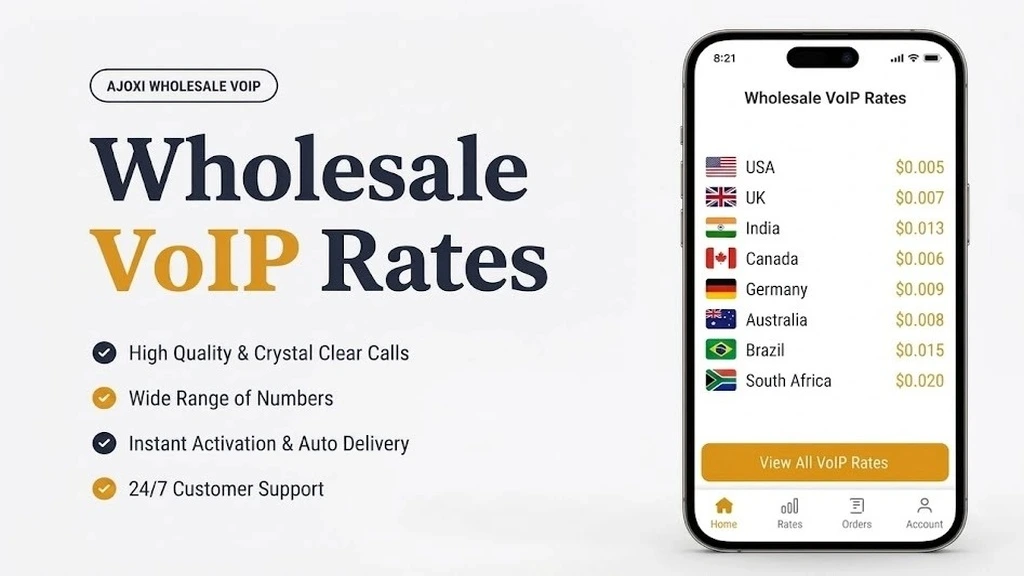
Tỷ lệ chấm dứt VoIP bán buôn là các nhà cung cấp dịch vụ và người bán lại trả phí theo phút hoặc mỗi giây để thực hiện cuộc gọi thoại từ mạng IP đến đích cuối cùng — điện thoại di động, điện thoại cố định hoặc điểm cuối PSTN ở bất kỳ đâu trên thế giới. Cước phí được thương lượng theo số lượng, tính bằng USD mỗi phút và thay đổi tùy theo quốc gia đích, loại tuyến đường, bậc chất lượng cuộc gọi và mức tăng thanh toán.
Hiểu được khoảng cách giữa tỷ giá niêm yết và chi phí thực tế là điểm khác biệt giữa các hoạt động thoại có lãi với các hoạt động liên tục theo đuổi lợi nhuận.
Giá chấm dứt không phải là một con số duy nhất — đó là một tập hợp các biến số nhân với nhau. Đây là những gì nằm trong mỗi tỷ lệ:
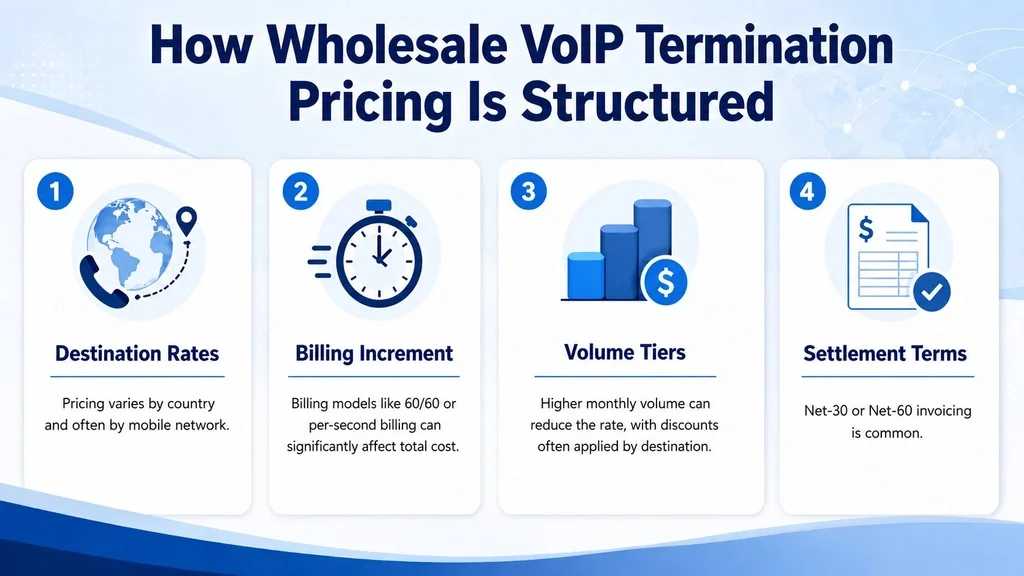
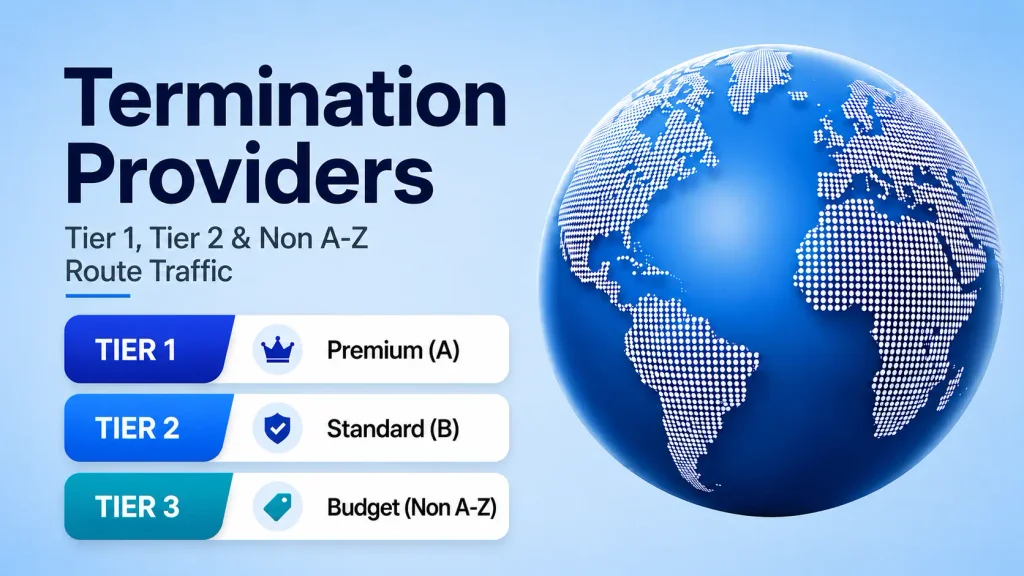
Tỷ lệ mỗi phút theo điểm đến. Mỗi quốc gia - thường là mọi mạng di động trong một quốc gia - đều có mức cước riêng. Điện thoại cố định ở Đức có giá khoảng 0,0045 USD/phút. Một số điện thoại di động ở Nigeria có thể đạt tới 0,028–0,035 USD/phút. Đây không phải là tùy ý — chúng phản ánh chi phí kết nối của nhà cung cấp dịch vụ địa phương, phụ phí theo quy định và sự khan hiếm các tuyến đường trực tiếp từ Nhà cung cấp cấp 1.
Tăng thanh toán. Đây là trình điều khiển chi phí bị bỏ qua nhiều nhất. Mức tăng hóa đơn 60/60 (tối thiểu 60 giây, làm tròn 60 giây) sẽ tính phí trọn một phút cho cuộc gọi 5 giây. Mức tăng 6/6 tính phí sáu giây. Đối với các trung tâm liên hệ chạy trình quay số tự động có tỷ lệ bỏ cuộc cao, sự khác biệt giữa các mô hình thanh toán có thể vượt quá chênh lệch tỷ lệ giữa hai nhà cung cấp cạnh tranh.
Tính phí theo giây có sẵn trên các tuyến đường cao cấp và có giá trị cao hơn cho lưu lượng truy cập trong thời gian ngắn.
Định giá theo khối lượng. Hầu hết các nhà cung cấp đều công bố cấu trúc tỷ lệ theo từng bước. Một bảng bậc điển hình trông như thế này:
| Khối lượng hàng tháng | Tỷ lệ mỗi phút (Mẫu) |
|---|---|
| 0 – 1M phút | $0.009 |
| 1 triệu – 5 triệu phút | $0.008 |
| 5 triệu+ phút | $0.007 |
Lưu ý: cấp độ lưu lượng thường được tính theo điểm đến chứ không phải tổng lưu lượng truy cập. Di chuyển 5 triệu phút đến 12 quốc gia khác nhau có thể không nhận được mức giảm giá giống như 5 triệu phút đến một quốc gia. Luôn xác nhận cách tính các bậc trước khi dự kiến tiết kiệm.
Điều khoản thanh toán. Lập hóa đơn Net-30 hoặc net-60 là tiêu chuẩn. Dòng tiền đóng vai trò quan trọng khi chấm dứt khối lượng lớn. Các nhà cung cấp yêu cầu thanh toán trước mà không cung cấp định tuyến dùng thử hoặc tính minh bạch của CDR là một dấu hiệu cảnh báo.
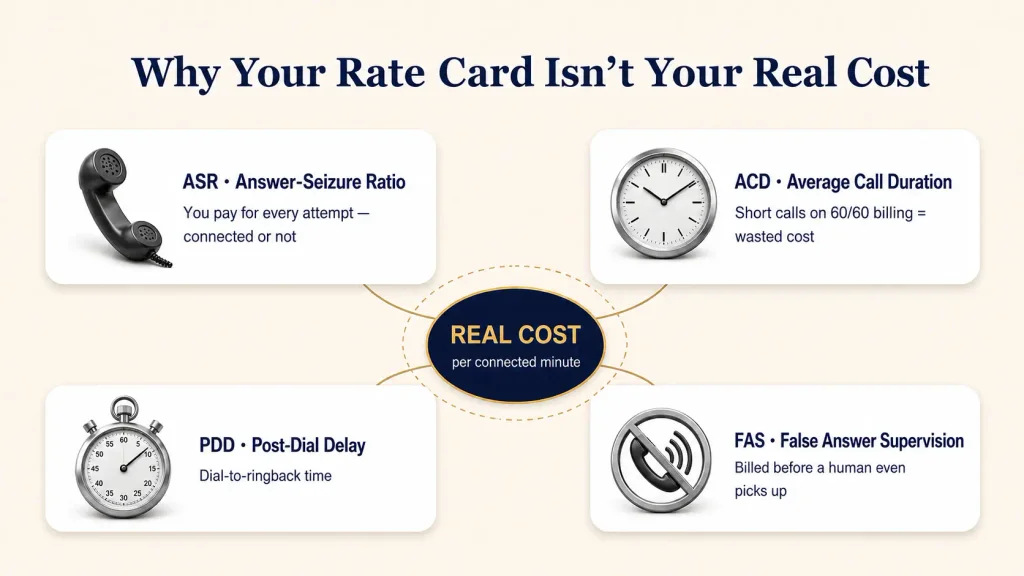
Đây là nơi hầu hết người mua bị đốt cháy. Bốn chỉ số chất lượng xác định chi phí thực tế của bạn cho mỗi phút kết nối thành công — và không có chỉ số nào xuất hiện trên thẻ giá:
ASR là tỷ lệ phần trăm số lần thử cuộc gọi thực sự kết nối. Tuyến đường có mức phí 0,007 USD/phút và ASR 55% có chi phí mỗi phút thành công cao hơn tuyến đường 0,009 USD/phút với ASR 92% — vì bạn trả tiền cho mỗi lần thử, dù có kết nối hay không. Phép toán: ở mức 55% ASR, chi phí hiệu quả của bạn trên các tuyến đường 0,007 USD là 0,0127 USD/phút thành công.
Với ASR 92%, tuyến đường 0,009 USD có giá 0,0098 USD/phút thành công.
của Ajoxi chấm dứt giọng nói mạng nhắm mục tiêu ASR trên 90% trên các tuyến CLI cao cấp trên phạm vi phủ sóng 243 lãnh thổ của nó. Trước khi định tuyến khối lượng, hãy yêu cầu dữ liệu ASR dành riêng cho đích — không phải mức trung bình của mạng.
ACD đo thời lượng cuộc gọi được kết nối trung bình. ACD ngắn trên lưu lượng quay số tự động (dưới 30 giây) kết hợp với tính phí theo phút sẽ tạo ra chi phí không tương xứng. Một nhà cung cấp cung cấp tính phí theo giây hoặc 6/6 cho lưu lượng truy cập của trung tâm cuộc gọi thực sự rẻ hơn một nhà cung cấp đưa ra mức giá cố định thấp hơn theo mức tăng 60/60.
PDD là thời gian từ khi hoàn thành quay số đến khi gọi lại lần đầu tiên. Dưới 3 giây là điểm chuẩn. Hơn 5 giây liên tục báo hiệu một đường dẫn thị trường xám hoặc được định tuyến lại nhiều lần. PDD cao không chỉ ảnh hưởng đến chất lượng cuộc gọi — nó còn làm tăng thời lượng thử cuộc gọi, điều này theo hóa đơn 60/60 có nghĩa là bạn đang trả tiền cho không khí chết.
FAS xảy ra khi công tắc của nhà cung cấp dịch vụ báo hiệu "đã trả lời" trước khi người nhấc máy - tính phí cho bạn về thời gian đổ chuông hoặc thậm chí hoạt động mạng trước khi đổ chuông. Ở quy mô lớn, FAS bổ sung một tỷ lệ phần trăm có thể đo lường được vào chi phí mỗi phút hiệu quả. Thanh toán miễn phí FAS có nghĩa là bạn chỉ trả tiền cho những cuộc gọi có người thực sự trả lời. Đây là điều khoản hợp đồng quan trọng nhất cần xác nhận trước khi ký với bất kỳ nhà cung cấp bán buôn nào.
Ajoxivận hành không có FAS trên tất cả các tuyến đường.
Không phải mọi cuộc gọi đều cần chất lượng tuyến đường như nhau. Trả mức giá CLI cho lưu lượng truy cập không phải CLI là lãng phí tiền bạc. Định tuyến các cuộc gọi bán hàng của doanh nghiệp theo hướng kinh tế sẽ làm giảm tỷ lệ trả lời và uy tín thương hiệu. Việc kết hợp loại tuyến đường với hồ sơ lưu lượng truy cập là cách bạn tối ưu hóa lợi nhuận mà không ảnh hưởng đến chất lượng.
| Loại tuyến đường | CLI đã qua? | Chi phí tương đối | Hồ sơ lưu lượng truy cập tốt nhất |
|---|---|---|---|
| CLI cao cấp | ID người gọi đầy đủ | Cao nhất | Doanh nghiệp, bán hàng ra nước ngoài, chăm sóc sức khỏe |
| CLI tiêu chuẩn | ID người gọi đầy đủ | Tầm trung | Kinh doanh tổng hợp, trung tâm liên lạc |
| Không phải CLI | Không có / bị tước bỏ | Thấp hơn 20–40% | Tiếp thị, xuất ngoại số lượng lớn |
| Tuyến đường CC | Chỉ mã quốc gia | Tầm trung | BPO, lưu lượng quốc tế hỗn hợp |
Ajoxicung cấp các tuyến CLI và CC trong một tài khoản - không cần quản lý các mối quan hệ nhà cung cấp riêng biệt cho các loại lưu lượng truy cập khác nhau. Đối với các BPO và trung tâm liên lạc xử lý lưu lượng quốc tế hỗn hợp, quyền truy cập một tài khoản này vào nhiều loại tuyến đường là một sự đơn giản hóa hoạt động có ý nghĩa.
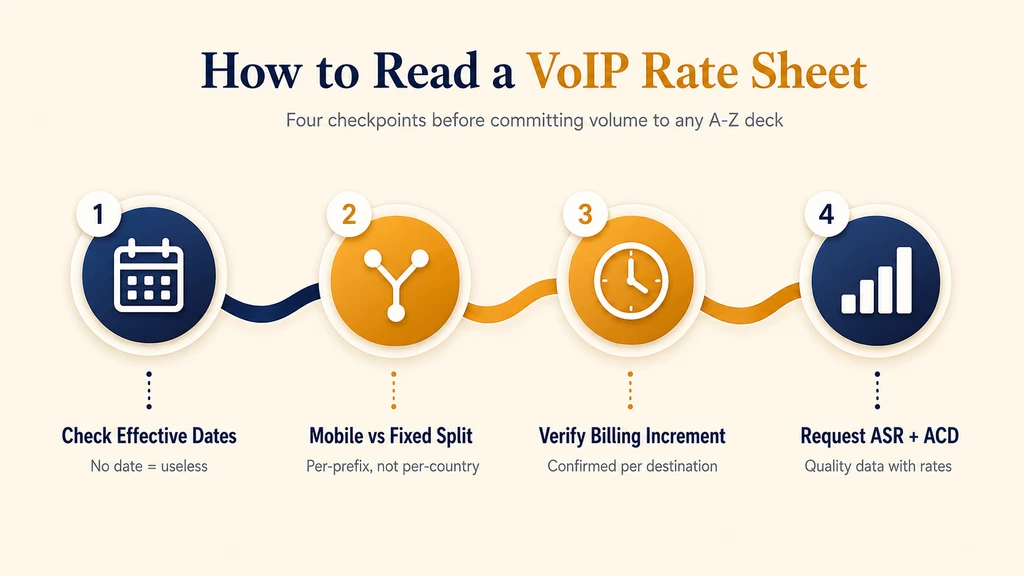
Bảng giá (còn gọi là bảng giá từ A-Z) là một tệp CSV hoặc bảng tính liệt kê giá mỗi phút theo mã quốc gia, thường theo tiền tố của nhà cung cấp dịch vụ di động. Đây là cách đánh giá một cách chính xác:
Kiểm tra ngày có hiệu lực. Giá cập nhật thường xuyên — đôi khi hàng tuần đối với các hành lang không ổn định như điện thoại di động Châu Phi hoặc điện thoại di động Nam Á. Bảng giá không có ngày hiệu lực sẽ vô dụng về mặt hoạt động.
Tìm kiếm sự phân chia di động và cố định. Một hàng duy nhất cho "Ấn Độ" trên bảng giá là một dấu hiệu cảnh báo. Ấn Độ có hàng chục nhà khai thác di động, mỗi nhà khai thác có chi phí kết nối khác nhau. Bộ bài A-Z chất lượng hiển thị giá theo tiền tố.
Xác minh mức tăng thanh toán cho mỗi điểm đến. Một số nhà cung cấp áp dụng mức tăng khác nhau cho các điểm đến khác nhau. Xác nhận tính phí 6/6 hoặc tính phí theo giây có sẵn cho các hành lang có lưu lượng lớn của bạn trước khi cho rằng tỷ lệ mỗi phút thấp áp dụng cho mô hình lưu lượng truy cập thực tế của bạn.
Yêu cầu dữ liệu ASR và ACD cùng với mức giá. Nhà cung cấp chia sẻ tiêu chuẩn chất lượng với thông tin về giá là minh bạch. Một người không, thì không.
Ajoxixuất bản các số liệu chất lượng dành riêng cho điểm đến cùng với thông tin về giá cả cho các máy khách VoIP bán buôn của mình — cung cấp cho người bán lại và nhà cung cấp dữ liệu để đưa ra quyết định định tuyến chứ không chỉ so sánh giá cả.
Định tuyến chi phí thấp nhất (LCR) tự động chọn đường dẫn rẻ nhất có sẵn cho mỗi cuộc gọi. Làm đúng cách sẽ giảm chi phí mỗi phút xuống 30–50% (VideoSDK, 2025) trong khi vẫn duy trì ngưỡng chất lượng. Nếu làm sai, nó sẽ gửi các cuộc gọi theo con đường rẻ nhất bất kể ASR - tạo ra bẫy chi phí hiệu quả chính xác được mô tả trước đó.
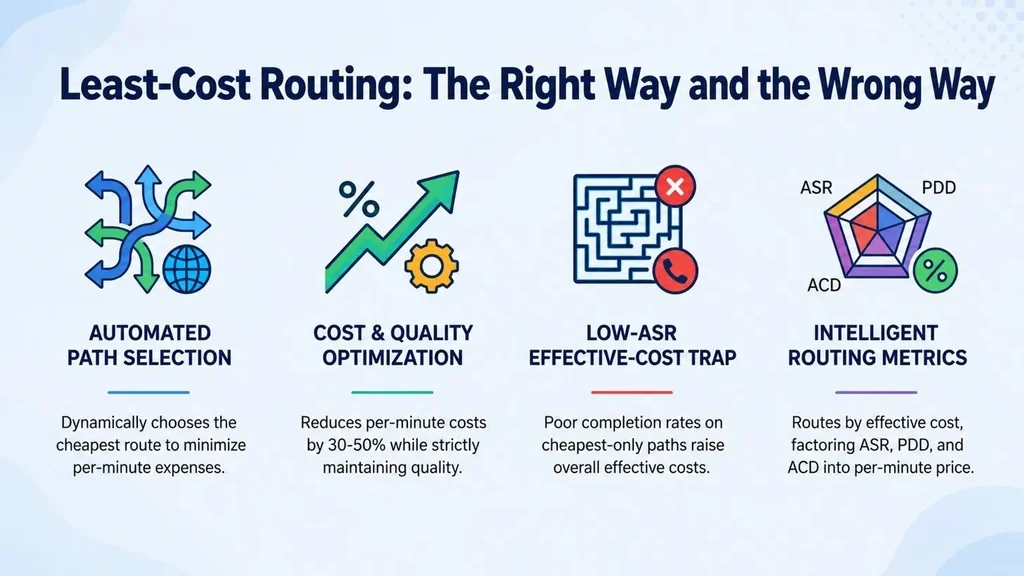
Hệ thống LCR được cấu hình tốt sẽ định tuyến theo chi phí hiệu quả trên mỗi phút kết nối chứ không phải theo cước danh nghĩa. Điều đó có nghĩa là ASR, PDD và ACD được tính đến trong quyết định định tuyến cùng với giá mỗi phút.
Đối với các đại lý quản lý lưu lượng truy cập hỗn hợp, cơ sở hạ tầng trung kế SIP của Ajoxihỗ trợ tích hợp LCR — định tuyến lưu lượng CLI có giá trị cao đến các đường dẫn cao cấp và lưu lượng truy cập số lượng lớn có chi phí hợp lý đến các tuyến tiêu chuẩn một cách tự động mà không cần can thiệp thủ công. Hướng dẫn rộng hơn về nhà cung cấp dịch vụ chấm dứt VoIP bán buôn bao gồm cách đánh giá cấp nhà cung cấp dịch vụ nào thực sự sở hữu các quyết định định tuyến này.
Một số thành phần chi phí nằm bên dưới tỷ lệ mỗi phút và chỉ xuất hiện ở dạng bản in đẹp:
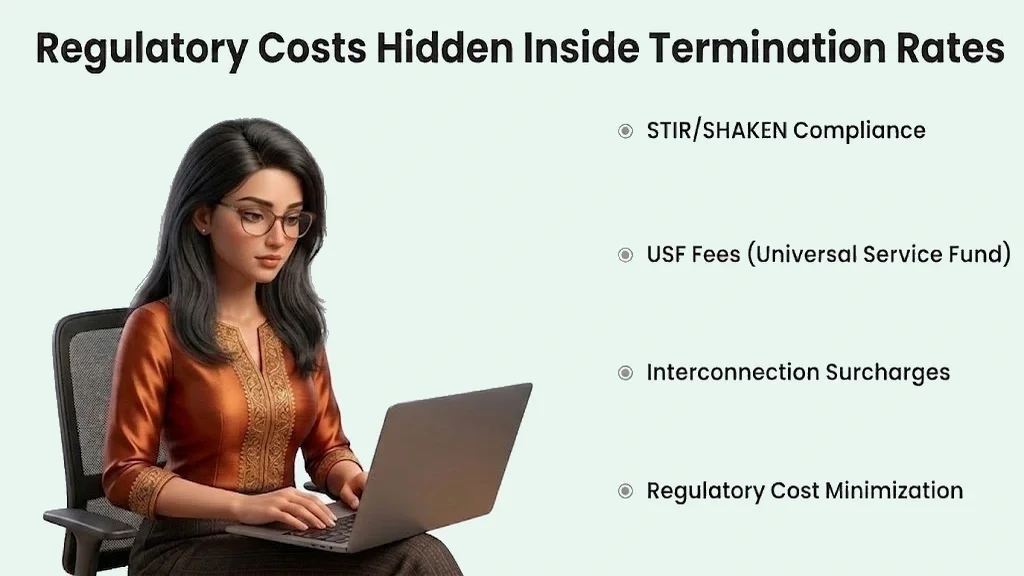
Chi phí tuân thủ STIR/SHAKEN. Lưu lượng truy cập đến Hoa Kỳ hiện yêu cầu chứng thực theo STIR/SHAKEN của FCC khuôn khổ. Các tuyến tuân thủ có một khoản phí bảo hiểm nhỏ so với các tuyến không được chứng thực — nhưng các cuộc gọi không được chứng thực có nguy cơ bị các nhà cung cấp dịch vụ đích gắn cờ là thư rác hoặc bị chặn hoàn toàn, điều này sẽ phá hủy ASR và khiến tuyến đường "rẻ" thực sự không thể sử dụng được.
Phí Quỹ dịch vụ toàn cầu (USF). Các hãng vận tải Hoa Kỳ chuyển khoản đóng góp của USF cho người mua bán buôn. Tỷ lệ phần trăm thay đổi hàng quý. Xác nhận xem nhà cung cấp của bạn báo giá bao gồm hay không bao gồm USF trước khi so sánh số liệu từ các nhà cung cấp khác nhau.
Phụ phí kết nối. Kết nối liên mạng — đặc biệt là để kết cuối với mạng di động tại các thị trường được quản lý như Ấn Độ, Brazil và một số khu vực ở Châu Âu — có mức phí khác nhau tùy theo thỏa thuận song phương. Nhà cung cấp có các kết nối trực tiếp trả ít hơn một lần định tuyến thông qua các công cụ tổng hợp và chuyển khoản tiết kiệm đó cho người mua.
Ajoxiduy trì nguồn gốc tuân thủ STIR/SHAKEN cho lưu lượng truy cập Hoa Kỳ và các kết nối trực tiếp trên mạng 243 lãnh thổ của mình — giảm thiểu lớp chi phí quy định làm tăng mức giá hiệu quả với các nhà cung cấp gián tiếp.
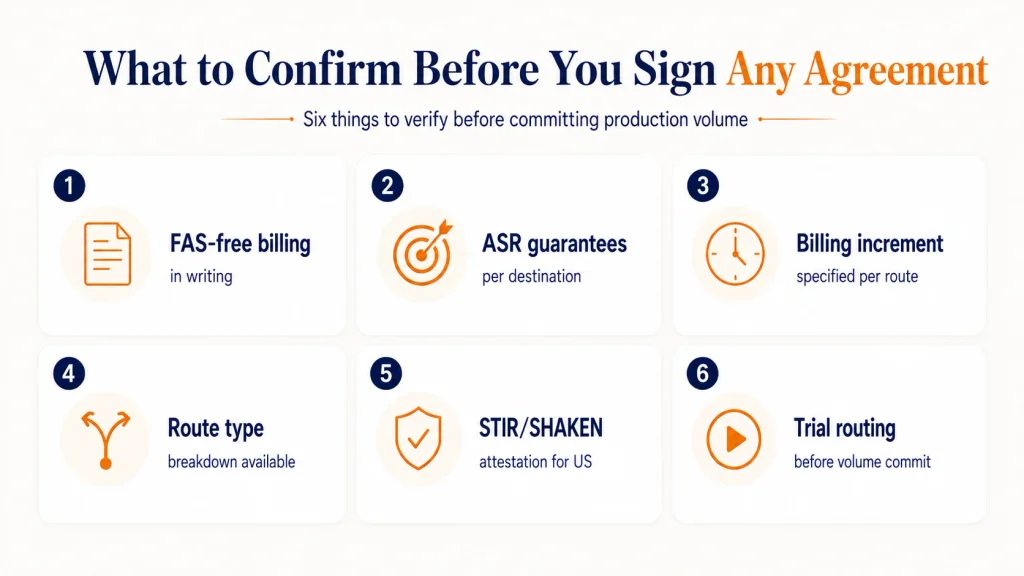
Xem qua danh sách này trước khi cam kết số lượng cho bất kỳ nhà cung cấp dịch vụ chấm dứt bán buôn nào:
Nền tảng này cung cấp định tuyến dùng thử với tính minh bạch hoàn toàn của CDR — vì vậy, bạn xác thực các số liệu hiệu suất thực chứ không phải xác nhận của nhà cung cấp trước khi cam kết. Đối với những người mua cũng cân nhắc mô hình đại lý, hướng dẫn về số phút VoIP bán buôn bao gồm cách tăng mức thanh toán và bậc âm lượng xếp chồng lên nhau trên tốc độ mỗi phút.
Tỷ lệ chấm dứt VoIP bán buôn vào năm 2026 là một vấn đề có nhiều biến số được ngụy trang dưới dạng giá mỗi phút. Thẻ giá là vạch xuất phát, không phải là vạch đích. Gia tăng thanh toán, ASR, ACD, PDD, FAS, kết hợp loại tuyến đường và lớp chi phí quy định đều nằm giữa cột bạn nhìn thấy và hóa đơn bạn thanh toán.
Các doanh nghiệp xây dựng trên nền tảng này có thể đi sâu hơn vào tổng quan về dịch vụ thoại bán buôn hoặc so sánh các nhà cung cấp VoIP bán buôn để có cái nhìn thị trường rộng hơn.
Người mua giành chiến thắng sẽ đo lường chi phí hiệu quả trên mỗi phút kết nối, yêu cầu thanh toán bằng văn bản không có FAS, xác thực các tuyến đường trên lưu lượng truy cập thực trước khi cam kết khối lượng và khớp loại tuyến đường với hồ sơ lưu lượng truy cập thay vì theo đuổi mức giá danh nghĩa thấp nhất.
Giọng nói vẫn là một công cụ tạo doanh thu có lợi nhuận biên khi bảng giá được đọc với kỷ luật xứng đáng — và khi STIR/SHAKEN, USF và các khoản phụ phí kết nối được tính trước khi so sánh, không phải sau khi hóa đơn đến.
Giá chấm dứt VoIP bán buôn là phí mỗi phút hoặc mỗi giây mà nhà cung cấp dịch vụ tính phí để thực hiện cuộc gọi VoIP từ mạng IP đến đích - điện thoại di động, điện thoại cố định hoặc điểm cuối PSTN. Mức giá thay đổi tùy theo quốc gia điểm đến, loại tuyến đường (CLI, Non-CLI, CC), mức tăng thanh toán và cam kết khối lượng. Chúng đại diện cho chi phí đầu vào cốt lõi cho các đại lý VoIP, trung tâm cuộc gọi và nhà cung cấp dịch vụ.
Các tuyến CLI (Nhận dạng đường dây gọi) chuyển số đầy đủ của người gọi đến đích, cho phép hiển thị ID người gọi. Các tuyến không CLI sẽ loại bỏ thông tin này và thường có chi phí thấp hơn 20–40%. Các tuyến CLI tạo ra tỷ lệ trả lời cao hơn và tuân thủ các quy định ở những thị trường bắt buộc phải có ID người gọi. Non-CLI phù hợp với lưu lượng truy cập đi lớn trong đó chi phí mỗi phút là ưu tiên hàng đầu và không yêu cầu ID người gọi.
Mức tăng thanh toán xác định cách đo thời gian cuộc gọi chính xác. Mức tăng 60/60 làm tròn mỗi cuộc gọi đến phút gần nhất — cuộc gọi 12 giây sẽ tốn trọn một phút. Mức tăng 6/6 tính theo khối 6 giây. Đối với các trung tâm liên lạc có thời lượng cuộc gọi trung bình ngắn, việc chuyển từ thanh toán 60/60 sang 6/6 có thể giảm đáng kể chi phí hiệu quả mỗi phút, ngay cả khi cước danh nghĩa cao hơn một chút.
FAS (Giám sát câu trả lời sai) xảy ra khi mạng của nhà cung cấp dịch vụ báo hiệu 'cuộc gọi đã được trả lời' trước khi có người nhấc máy, kích hoạt tính phí trong thời gian đổ chuông. Ở quy mô lớn, FAS tăng đáng kể chi phí trên mỗi phút kết nối thành công. Thanh toán không có FAS — nơi tính phí chỉ áp dụng cho những cuộc gọi được trả lời thực sự — là tiêu chuẩn ngành giữa các nhà cung cấp bán buôn có uy tín và phải được xác nhận bằng văn bản trước khi ký bất kỳ thỏa thuận nào.
ASR (Tỷ lệ trả lời-bắt giữ) là tỷ lệ phần trăm số lần thử cuộc gọi kết nối thành công. Tuyến đường có tốc độ mỗi phút thấp nhưng ASR kém - giả sử là 50% - có chi phí cao hơn cho mỗi cuộc gọi được kết nối so với tuyến đường có tốc độ cao hơn với 90% + ASR. Bởi vì bạn trả tiền cho mỗi lần thử, chi phí hiệu quả cho mỗi phút thành công của bạn là tỷ lệ danh nghĩa chia cho ASR.
Luôn đánh giá các tuyến đường dựa trên chi phí hiệu quả chứ không phải tỷ lệ tiêu đề.
Nhân viên lễ tân AI, tuyến bán buôn, số ảo - được xây dựng trên một nền tảng với giá cả minh bạch và NOC 24/7.